A freshly cleaned carpet should make your home feel better, not leave you wondering what that damp, musty smell is. If you are asking why carpets smell after cleaning, the answer is usually moisture – but the source of that moisture, the condition of the carpet, and how quickly it dries all matter.
In Summerville and across the Lowcountry, humidity can turn a minor drying delay into a noticeable odor. The good news is that most post-cleaning smells are temporary and preventable. A carpet that stays damp too long needs attention, but it does not always mean the cleaning itself was done wrong.
Why Carpets Smell After Cleaning
Carpet fibers, backing, and padding can hold moisture after a cleaning appointment. When water lingers, it can reactivate odor-causing bacteria already present in the carpet. That is why a carpet may smell stronger after it gets wet, even when it looked clean before service.
This is especially common in homes with pets, young children, older carpeting, or past spills. Urine residue, food spills, tracked-in soil, and everyday body oils can settle below the surface. Cleaning removes a great deal of that buildup, but moisture can briefly bring hidden odors back to the surface while the carpet dries.
A clean, slightly damp smell that fades within a day is generally not a concern. A sour, mildew-like, or pet-urine odor that persists after the carpet is fully dry is different. That points to a deeper source that may require professional odor treatment rather than another basic cleaning.
The Most Common Causes of a Damp Carpet Odor
Slow drying in Lowcountry humidity
The Charleston-area climate is hard on wet surfaces. On a humid day in Goose Creek, Ladson, or Cane Bay, opening windows may not speed drying at all because outdoor air is already carrying a lot of moisture. Without airflow and indoor humidity control, a carpet can stay damp long enough for a musty smell to develop.
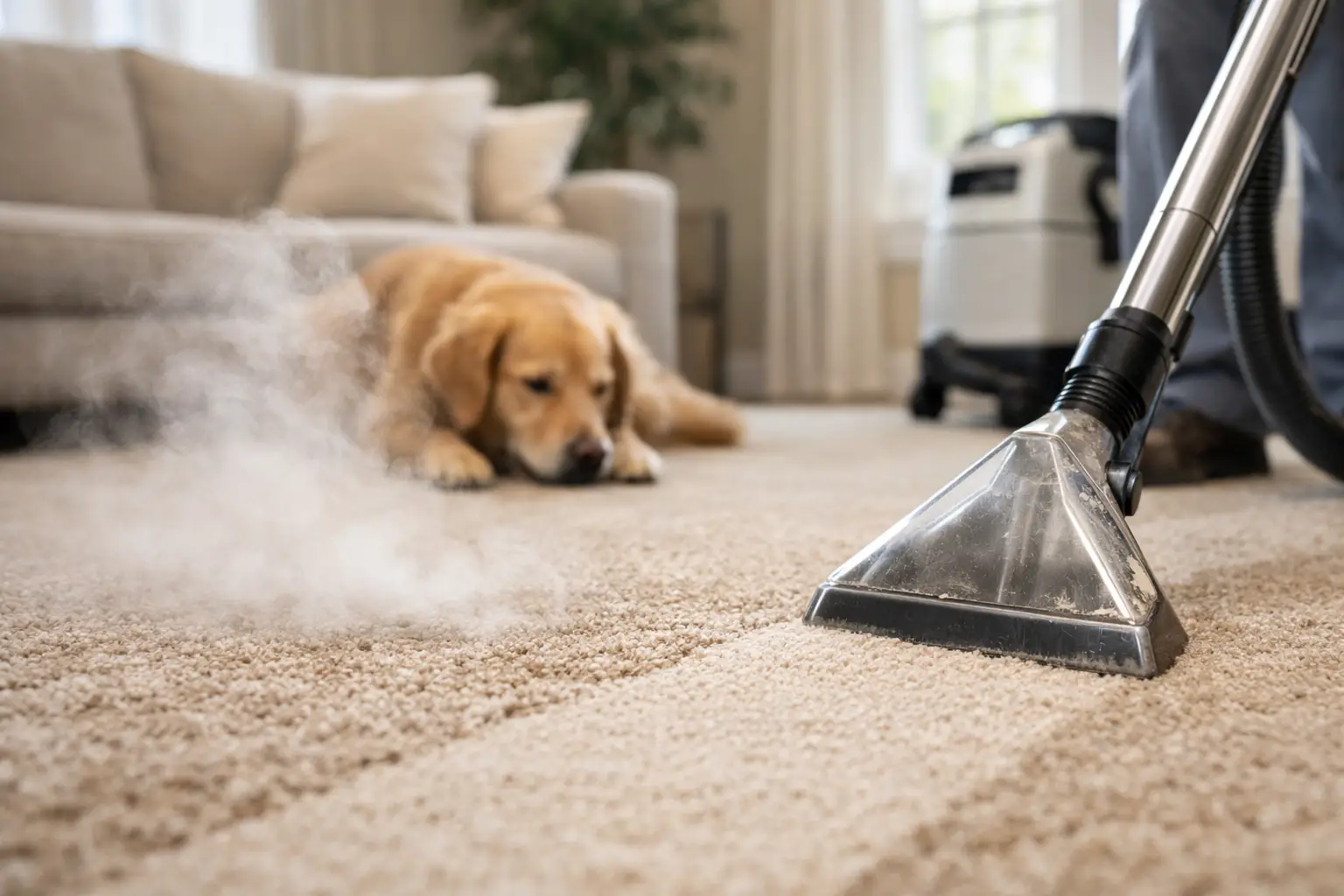
Professional truck-mounted steam cleaning equipment helps because it extracts more water than many rental machines or low-powered portable units. Still, drying time depends on carpet thickness, indoor temperature, humidity, ventilation, and how heavily soiled the carpet was. Most professionally cleaned carpets dry within several hours, though a dense carpet or humid home can take longer.
Old spills and pet contamination below the fibers
Pet accidents are rarely limited to the spot you can see. Urine can travel through carpet fibers into the backing, padding, and sometimes the subfloor. Once those materials get wet again, odor-causing compounds can become noticeable. A standard cleaning can improve the surface, but it cannot always reach contamination beneath the carpet.
The same is true of old drink spills, water damage, and heavily soiled traffic lanes. Homeowners may think the carpet created a new smell after cleaning, when the moisture actually revealed an existing problem. This is one reason a true pet odor evaluation matters. The right solution depends on how deep the contamination goes.
Too much water or weak extraction
Overwetting is a common issue with do-it-yourself machines. Many rentals apply plenty of solution but lack the suction needed to pull it back out effectively. The carpet may feel wet for a day or two, and the leftover moisture can create a stale odor.
Using too much cleaning product can also make the problem worse. Soapy residue attracts soil and may leave the carpet feeling crunchy or sticky after it dries. More shampoo is not a stronger clean. Proper cleaning is about using the right amount of solution, rinsing thoroughly, and extracting as much moisture as possible.
Mold or mildew already present
A persistent musty smell can sometimes signal mildew in the carpet, pad, or subfloor. This is more likely after a plumbing leak, flooding, an overflowing appliance, or repeated moisture exposure. In that situation, surface cleaning alone may not solve the issue.
If the carpet smells moldy before cleaning, stays wet longer than expected, or the odor returns repeatedly, it is wise to investigate for a moisture source. Do not cover it with fragrance or carpet powder. Finding and correcting the underlying water issue protects your home and your indoor air quality.
What to Do When Your Carpet Smells After Cleaning
Start by helping the carpet dry quickly. Turn on ceiling fans, set your HVAC system to a comfortable cooling setting, and run portable fans across the carpet if you have them. A dehumidifier is particularly helpful during a humid South Carolina afternoon. Keep pets, children, and heavy furniture off the damp carpet until it is dry.
Avoid closing up the room and hoping for the best. Air movement matters more than a blast of heat. If the outside air is muggy, keep windows closed and let your air conditioning or dehumidifier do the work instead.
Give the carpet a reasonable drying window. In many homes, it should be dry to the touch in six to 12 hours. It can take up to 24 hours in some circumstances, including heavy cleaning, thick carpet, poor airflow, and high humidity. If it is still noticeably wet after 24 hours, contact the cleaning company promptly.
Do not apply store-bought deodorizer, vinegar, essential oils, or extra soap while the carpet is damp. These products may mask the smell for a short time, leave residue, or complicate the treatment needed later. If a pet odor remains after drying, tell the cleaner where it is strongest. Targeted odor treatment is more effective when the source area is identified.
When a Post-Cleaning Odor Needs Professional Attention
Call for help if the smell is strong, gets worse after the carpet dries, or returns every time the room becomes humid. A professional should also take a closer look if you notice discoloration, damp padding, a history of leaks, or a distinct urine smell that never fully goes away.
For homes in Nexton, Moncks Corner, North Charleston, and nearby communities, the most effective approach is not always a repeat cleaning. It may involve locating pet contamination, treating the affected area with an appropriate odor-removal process, or addressing moisture beneath the carpet. There is a trade-off here: deeper odor work can take more time than a standard appointment, but it is designed to solve the cause instead of simply freshening the surface.
At Carolina Green Steam, we use professional truck-mounted steam cleaning and family- and pet-safe, green-certified products to remove soil while supporting faster drying. For tougher odor concerns, we recommend the treatment that fits the condition of the carpet rather than promising a one-size-fits-all fix. No excuses and no unnecessary chemical-heavy shortcuts.
How to Prevent Carpet Odors Next Time
A few habits make a real difference. Vacuum regularly so dry soil does not become muddy residue during cleaning. Treat pet accidents promptly, and avoid soaking affected spots with multiple products. If your home has high humidity, use your HVAC system and a dehumidifier as needed, especially in rooms with thick carpet or limited airflow.
It also helps to schedule routine professional cleaning before carpet soils become deeply embedded. A carpet protector can be a practical option for busy family rooms, pet areas, and dining spaces because it gives spills more time to be removed before they settle into the fibers. It will not make carpet stain-proof, but it can make maintenance easier.
Your carpet should smell clean once it is dry – not perfumed, not sour, and not like a damp basement. If a lingering odor is disrupting the comfort of your home, treat it as useful information. With the right drying conditions and the right level of professional care, your floors can feel fresh, safe for your family and pets, and ready for everyday life again.