A carpet can look clean on the surface while holding fine sand, pet dander, food residue, and the sticky soil that Lowcountry humidity seems to make worse. When homeowners ask about steam cleaning versus dry cleaning, they usually want a straight answer: Which method will actually leave the home cleaner without creating a long, inconvenient drying process?
For most homes in Summerville, Goose Creek, Ladson, and across the Charleston area, the right answer depends on the material, the type of soil, and what is happening beneath the surface. Steam cleaning is generally the stronger choice for deep restorative cleaning. Dry cleaning has a place when quick turnaround or moisture-sensitive materials are the priority.
What “Steam Cleaning” Really Means for Carpet
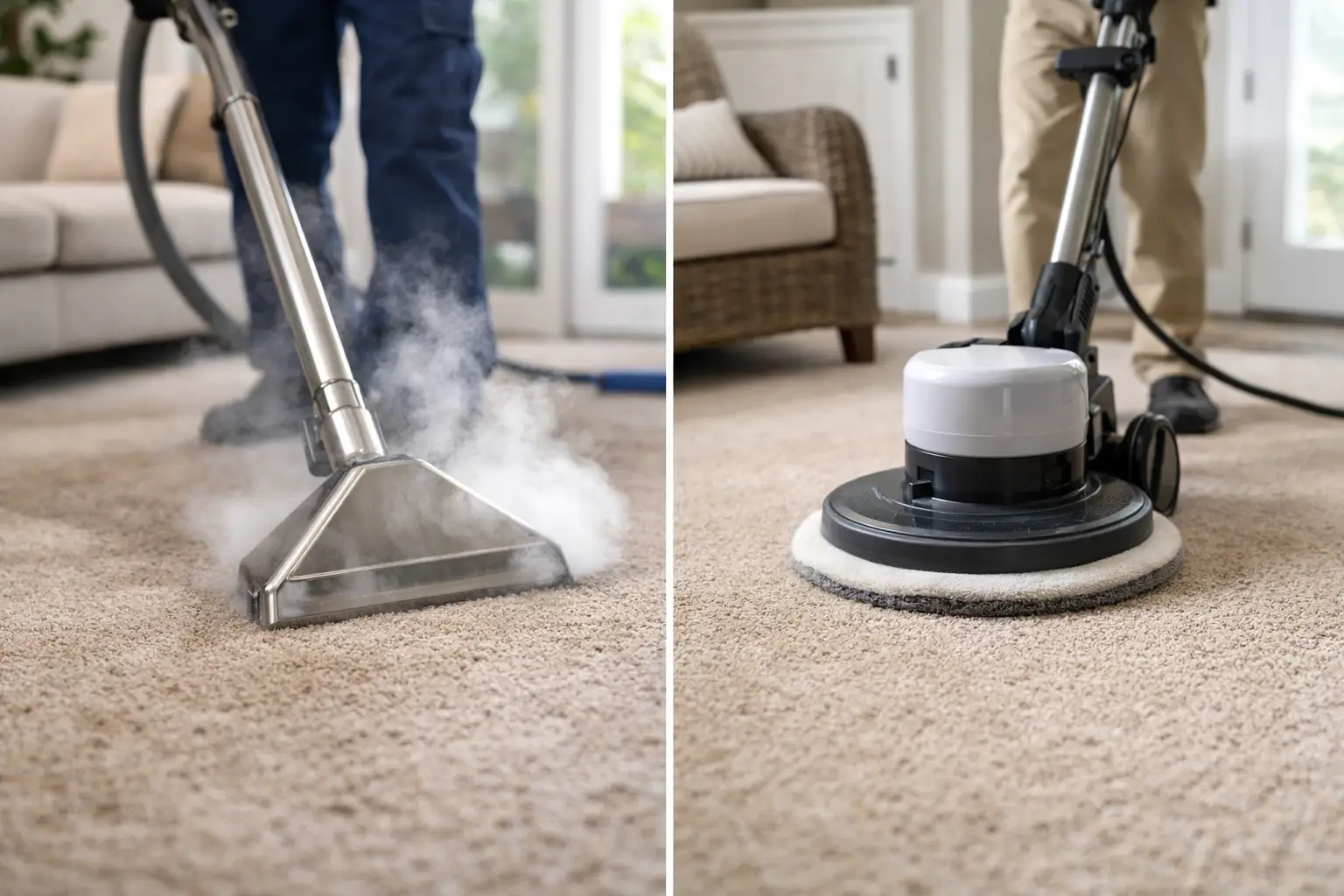
Professional steam cleaning is commonly used to describe hot water extraction. It does not simply blow steam across the carpet. A trained technician applies a carefully measured cleaning solution, uses hot water to loosen embedded soil, and then extracts the water, cleaning solution, and debris with powerful vacuum equipment.
Truck-mounted equipment makes a meaningful difference. It delivers strong suction that pulls more moisture and soil from carpet fibers than most rental machines or small portable units. That matters in the South Carolina Lowcountry, where warm, humid conditions can slow drying when a carpet is left overly wet.
A properly performed hot water extraction service is designed to leave carpet damp, not soaked. Dry times vary with carpet type, indoor airflow, humidity, and how heavily the carpet was soiled, but many homes see carpets dry within several hours. Running ceiling fans and maintaining normal air conditioning can help.
For families with children, pets, or allergy concerns, the biggest benefit is depth. Steam cleaning can remove the tracked-in dirt, oils, and allergens that regular vacuuming cannot reach. It is also often the preferred method for addressing pet accidents when odor treatment is included, because the source needs to be treated below the visible stain.
How Dry Cleaning Works
Dry carpet cleaning is a broad term for low-moisture methods. Some services apply an absorbent compound or powder that surrounds soil before being vacuumed away. Others use encapsulation products that dry around loosened debris, allowing it to be removed later through vacuuming.
The clear advantage is speed. A low-moisture cleaning can often be walked on sooner than hot water extraction, which can be helpful in a busy office, a short-term rental with a same-day turnover, or a home where immediate access is essential.
That convenience comes with limits. Dry cleaning methods may freshen lightly soiled carpet and improve appearance, but they do not always provide the same flushing action as extraction. If a carpet has months of accumulated dirt, recurring pet odor, sticky spills, or heavy traffic patterns near entryways, dry cleaning may leave soil behind in the backing or lower fibers.
It is also worth separating carpet dry cleaning from dry cleaning clothes. Garment dry cleaning uses specialized solvents and is performed by a dry cleaner. It is not the process used for residential wall-to-wall carpet cleaning.
Steam Cleaning Versus Dry Cleaning: The Real Differences
The most practical difference is not whether one method is universally “better.” It is whether the cleaning method matches the problem in front of you.
Steam cleaning uses more water but also provides a more thorough rinse and extraction process. It is typically the better fit for family rooms, bedrooms, hallways, stairs, and other areas where daily life has built up in the carpet. Think muddy shoes after a summer storm, sandy feet after a beach weekend, pet traffic, snack spills, and the gray traffic lanes that slowly appear in busy walkways.
Dry cleaning uses very little water and offers faster access to the room. It can be a reasonable maintenance option for lightly soiled commercial carpet or a property that cannot be taken out of use for long. However, fast dry time should not be confused with deep cleaning power.
A reputable cleaning professional should inspect the carpet before recommending either approach. Fiber type, age, manufacturer guidance, stains, prior cleaning history, and moisture concerns all matter. No excuses and no one-size-fits-all promises – the goal is to clean effectively while protecting the carpet.
When Steam Cleaning Is Usually the Better Choice
Hot water extraction is often the right recommendation when homeowners want visible improvement and a more complete clean. It is particularly useful for carpets with embedded soil, allergy-related concerns, lingering odors, or stains that need more than a surface treatment.
Pet owners in Nexton, Cane Bay, and Moncks Corner often benefit from steam cleaning paired with targeted odor treatment. A stain may be easy to see, but odor-causing residue can spread into carpet backing and padding. Simply deodorizing the surface may mask the smell for a short time without solving the underlying issue.
Steam cleaning also works well before major life moments: welcoming a new baby, hosting relatives, putting a home on the market, or moving into a property. Fresh-looking carpet is nice, but homeowners also appreciate knowing the cleaning process has removed more of what guests and family members would otherwise track through the house.
For upholstery, the same principle applies, but the fabric matters even more. Many upholstered pieces can be safely cleaned with a low-moisture or extraction method, while others require a specialized approach based on the manufacturer’s cleaning code. A professional should test and assess the fabric before beginning work.
When Dry Cleaning May Be the Smarter Option
There are situations where less moisture is the responsible choice. Certain natural-fiber rugs, delicate upholstery fabrics, and carpets with specific manufacturer restrictions may not be good candidates for standard hot water extraction. A qualified technician can recommend an appropriate method after examining the item.
Dry cleaning can also work for a light maintenance clean when the carpet is in good condition and the homeowner needs a quick turnaround. A well-maintained office suite in North Charleston or a lightly used rental may prioritize ready-to-use floors over the deeper restoration needed in a heavily lived-in family home.
The key is honest expectations. If the carpet is deeply soiled, dry cleaning may improve appearance without fully removing the material causing dullness, odors, or rapid re-soiling. Homeowners deserve a recommendation based on results, not just the quickest service to schedule.
Safety Is About More Than the Method
Some homeowners assume steam cleaning is automatically chemical-free or that dry cleaning automatically involves harsh chemicals. Neither assumption is always true. Safety depends on the products used, how they are applied, and whether residues are thoroughly removed.
A green-certified, non-toxic cleaning approach can help families maintain a cleaner home without bringing unnecessary harsh chemicals into the spaces where children play and pets rest. Proper extraction is part of that standard because it helps remove the cleaning solution along with the loosened soil.
For Charleston-area homeowners, humidity management is another part of safe, effective service. Over-wetting carpet is not normal and should not be accepted as the price of a deep clean. Professional equipment, correct technique, and strong extraction help minimize moisture so carpets can dry properly.
Get More From Either Cleaning Method
The best cleaning result lasts longer when a home has a few simple habits in place. Vacuum regularly, especially near doors and in high-traffic areas. Blot spills promptly instead of rubbing them deeper into the fibers. Use entry mats to reduce sand and dirt, and consider carpet protector after professional cleaning if spills, pets, or active kids are part of everyday life.
Carpet protector does not make carpet stain-proof, but it can give you more time to address a spill before it bonds with the fibers. It also helps reduce the wear caused by oily soil attaching to carpet over time.
For homes with recurring pet accidents, avoid relying on heavily scented store products. The odor may return because the contamination was never fully treated. A professional assessment can identify whether the issue is limited to the carpet surface or requires deeper odor remediation.
Carolina Green Steam helps homeowners choose the cleaning method that makes sense for their carpet, rugs, and upholstery – with family- and pet-safe products, professional equipment, and a satisfaction guarantee behind the work. Whether your home needs a deep reset after a busy season or a careful maintenance clean before guests arrive, choose the service that addresses the soil you have, not just the drying time you want.