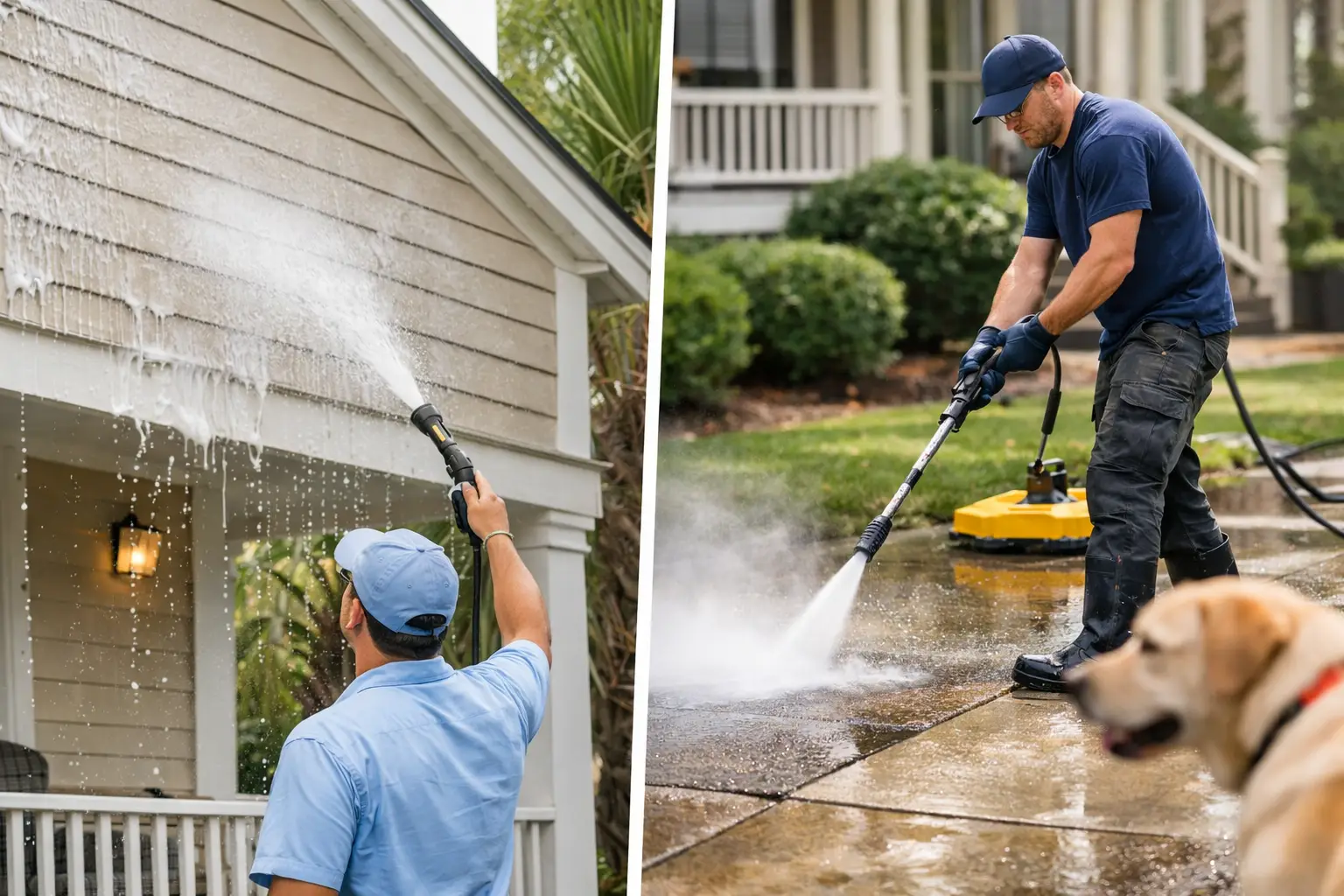
A black-green film on your siding is not just a curb-appeal problem. In Summerville’s warm, humid climate, algae, mildew, pollen, and road grime can settle into exterior surfaces quickly – especially on shaded sides of the house, roofs beneath trees, and patios near landscaped beds. When comparing soft washing vs pressure washing, the right choice comes down to one question: what can this surface safely handle?
Both methods can make a home look dramatically better. But they work in very different ways. Using the wrong approach can leave behind the organic growth that caused the staining, or worse, damage shingles, siding, wood, mortar, screens, and outdoor finishes. A professional cleaning plan matches the method to the material, not just the mess.
Soft Washing vs Pressure Washing: The Main Difference
Soft washing relies on low water pressure and a carefully prepared cleaning solution to treat and remove organic buildup. Rather than trying to blast algae away, the solution breaks down the algae, mildew, mold, and other biological growth at its source. The surface is then gently rinsed clean.
Pressure washing uses a stronger, more forceful stream of water to loosen and remove embedded dirt, mud, surface staining, and buildup. It is highly effective for durable hardscapes, but water pressure must be controlled by someone who understands nozzle selection, distance, surface condition, and drainage.
Think of soft washing as a treatment-first approach. Pressure washing is a mechanical-cleaning approach. Neither is automatically better. The best result depends on whether you are cleaning a delicate exterior surface or a hard, durable one.
When Soft Washing Is the Safer Choice
Soft washing is usually the preferred method for surfaces where high pressure could strip, scar, lift, crack, or force water where it does not belong. That includes most roof cleaning and house washing projects.
Roofs need a gentle approach
Roof shingles are designed to shed rain, not withstand a concentrated high-pressure stream. Pressure can dislodge protective granules, break or lift shingles, compromise seals, and shorten the life of the roof. A low-pressure roof treatment removes the dark algae streaks common throughout the Lowcountry without putting unnecessary force on the roofing system.
The same caution applies to tile, metal, and older roofing materials. Every roof has its own condition and manufacturer guidance, so the cleaning method should be chosen after a close inspection, not guessed from the ground.
Siding, trim, and painted surfaces are vulnerable
Vinyl siding, painted wood, stucco, fiber cement, soffits, and exterior trim can look tough, but they are not all high-pressure surfaces. Too much force can drive water behind siding, chip paint, etch softer materials, damage window seals, or create streaking that is difficult to correct.
For homes in Nexton, Cane Bay, Goose Creek, Ladson, and surrounding communities, a professional soft wash can safely restore a clean appearance while addressing the mildew and algae that thrive in our humidity. It is especially useful on homes with detailed trim, older paint, delicate landscaping, or heavy biological staining.
Fences, screens, and outdoor furniture may benefit too
Wood fences, screened porches, pergolas, composite surfaces, and outdoor furniture often need a gentler touch. In these cases, lower pressure helps avoid raised wood grain, torn screens, splintering, and finish damage. A cleaning solution can do the heavy lifting without turning a maintenance project into a repair project.
When Pressure Washing Makes Sense
Pressure washing earns its place on solid, durable surfaces that collect ground-in dirt and need more physical cleaning power. Properly performed, it can refresh heavily used outdoor areas and improve the appearance of a property fast.
Concrete driveways, sidewalks, patios, curbs, and many pool decks are common candidates. These surfaces collect tire marks, red clay, leaf tannins, grease, mildew, and the everyday grime that comes with Charleston-area rain and humidity. A controlled pressure wash can lift that buildup from the pores of concrete and make walkways safer by reducing slippery organic growth.
Driveway cleaning is particularly valuable before listing a home, hosting guests, or catching up on seasonal exterior maintenance. For homeowners in North Charleston, Moncks Corner, and Summerville, a cleaner driveway and entryway can change the first impression of the entire property.
That said, “concrete” does not always mean maximum pressure. Fresh concrete, decorative concrete, stamped finishes, pavers, loose mortar, and older surfaces may require lower settings, specialty cleaners, or a different technique. A professional evaluates the condition before starting.
Why High Pressure Can Cause Expensive Damage
A consumer pressure washer can be useful for certain jobs, but it is not a one-setting solution. The stream can cut into wood, peel paint, strip finishes, gouge soft brick, and leave visible wand marks in concrete. It can also force moisture into walls, under siding, around windows, or beneath roof materials.
There is another issue homeowners do not always see right away: cleaning only the surface of algae can make staining appear better temporarily without fully treating the growth. In a humid South Carolina summer, the problem may return sooner than expected. Soft washing is often selected specifically because it treats the organic source rather than relying on water force alone.
Professional equipment matters, but judgment matters just as much. The correct pressure, solution strength, dwell time, rinse method, and protection for nearby plants all affect the outcome.
Choosing the Right Method for Each Part of Your Property
Most homes do not need only one method. A well-planned exterior cleaning service often combines soft washing and pressure washing based on the surfaces involved.
For example, a house may need soft washing for the roof, siding, gutters, trim, and screened porch, while the driveway, front walk, patio, and certain concrete areas receive controlled pressure washing. This gives the homeowner a consistent clean without exposing delicate materials to unnecessary force.
Before any work begins, consider the age and condition of the surface, the type of staining, nearby plants, drainage, and whether there are existing cracks, loose paint, or damaged seals. These details are why a quick inspection is more reliable than choosing a service solely by a photo or a bargain price.
A Safer Exterior Cleaning Plan for Lowcountry Homes
Lowcountry homes face conditions that are hard on exterior surfaces: long humid seasons, salt air closer to the coast, heavy pollen, afternoon storms, tree cover, and persistent algae. Regular cleaning is not just cosmetic. It can help homeowners keep buildup from becoming harder to remove and spot surface concerns before they grow.
Look for a local provider that explains which method they recommend and why. They should be clear about roof safety, plant protection, surface testing, and what results are realistic for older stains or worn materials. No excuses, no vague promises – just the right process for your home.
Carolina Green Steam provides professional house washing, soft washing, roof cleaning, and pressure washing for homeowners throughout Summerville and the greater Charleston area. Our team treats every property with the same care we would want around our own families, pets, landscaping, and outdoor living spaces.
If algae is creeping up the siding, dark roof streaks are taking over, or your concrete no longer looks clean, do not assume more pressure is the answer. A thoughtful assessment can protect your investment and leave you with the clean, cared-for home you want to come back to.