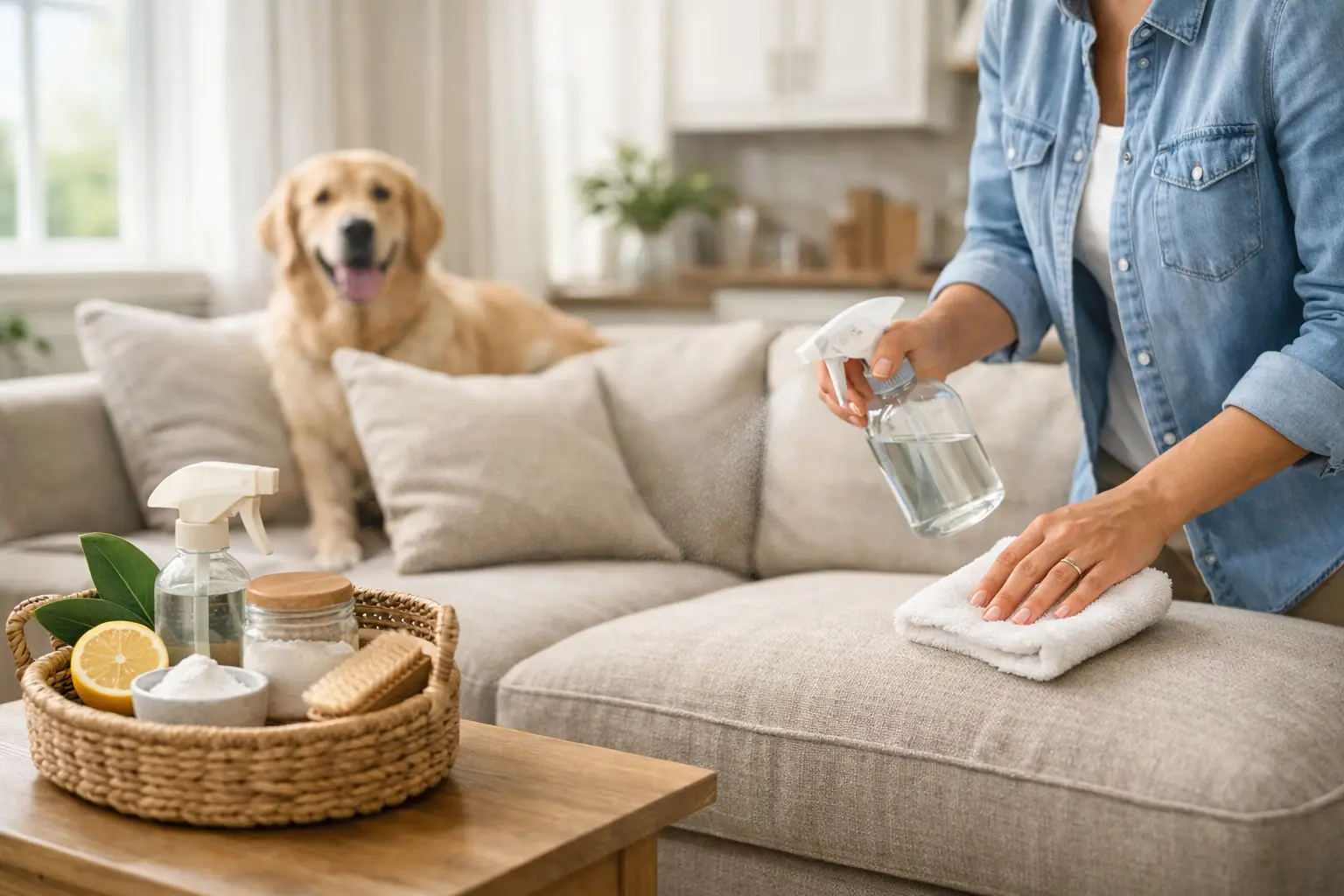
A sofa can look perfectly clean and still hold onto the smells of daily life: wet dogs after a Lowcountry rainstorm, popcorn during movie night, takeout, spilled milk, and the humid air that settles into fabric. To remove sofa odors for good, you need to address what has soaked below the surface, not simply cover it with fragrance. That matters when children, pets, and guests spend so much time on the furniture.
Why Sofas Start to Smell
Upholstery acts like a filter. Fabric cushions collect skin oils, pet dander, food particles, dust, and moisture over time. When moisture gets into the cushion foam or the padding underneath, bacteria can feed on those residues and create a lingering sour, musty, or pet-related odor.
In Summerville and throughout the Charleston area, humidity can make the problem more noticeable. A sofa near an entryway, window, or busy family room may absorb dampness from wet clothes, paws, and everyday traffic. Turning on a candle or spraying an air freshener may make the room smell better briefly, but it does not remove the odor source.
The right approach depends on the odor. A lightly stale sofa may respond well to vacuuming and careful deodorizing. A urine accident, mildew smell, or odor that returns after the cushions dry usually needs deeper treatment.
How to Remove Sofa Odors at Home
Before using any product, find the upholstery care tag. It is usually under a cushion or beneath the sofa. The tag tells you which cleaning method the manufacturer allows:
- W means water-based cleaning is generally acceptable.
- S means use a solvent-based upholstery cleaner only.
- WS means either water- or solvent-based products may be used.
- X means vacuuming or professional cleaning only.
These codes are worth following. Using too much water on the wrong fabric can leave water rings, cause colors to bleed, or trap moisture inside the cushions. If you are unsure, test any method in a hidden spot first.
Start with a thorough vacuuming
Remove loose cushions and vacuum every surface slowly, including seams, creases, under cushions, and along the back. Use the upholstery attachment if available. This step is more useful than it sounds because loose hair, crumbs, and dust can be part of the odor problem.
For pet owners, use a rubber brush or a clean, dry rubber glove to gather stubborn hair before vacuuming. Pet hair holds oils and dander, so removing it helps the sofa smell fresher before you apply any deodorizing treatment.
Use baking soda carefully for mild odors
For a fabric sofa labeled W or WS, baking soda can help with mild, dry odors. Sprinkle a light, even layer across the upholstery and let it sit for several hours. Overnight is often better if the sofa can remain unused. Then vacuum it thoroughly, including the seams.
Baking soda is not a cure for deep pet urine, mold, or a spill that reached the cushion foam. It can absorb surface odors, but it cannot break down the source of an odor hiding lower in the upholstery. Also, avoid overapplying it. Fine powder left in seams or cushion filling can be difficult to remove completely.
Treat fresh spills without soaking the fabric
If food, drinks, or pet accidents are recent, act quickly. Blot the area with a clean white towel. Do not scrub, because scrubbing drives the spill deeper and can spread it across the fibers.
For a water-safe fabric, use a small amount of a family- and pet-safe upholstery cleaner according to its directions. Apply it to a cloth rather than saturating the sofa. Blot gently, then use a second dry towel to pull up moisture. Open windows when the weather allows, run a ceiling fan, or use a fan aimed near the sofa to speed drying.
The goal is clean fabric that dries quickly. Excessive moisture is one of the biggest reasons an odor goes away for a day, then returns stronger.
Let cushions air out completely
If cushions are removable and the care label permits it, stand them on their sides in a dry, well-ventilated room after cleaning. Rotate them periodically so air can reach all sides. Avoid placing damp cushions directly in strong outdoor sunlight for long periods, as heat and sunlight can fade some fabrics.
Do not put cushions back on the sofa until they are dry all the way through. The surface may feel dry while the foam inside remains damp. That hidden moisture can create the musty smell you were trying to solve.
When Pet Odor Needs More Than a Surface Cleaner
Pet accidents are different from ordinary spills. Urine can travel through upholstery fabric into the cushion filling, the sofa deck, and sometimes the floor beneath the furniture. As it dries, it can leave odor-causing residues behind. On humid days, those residues may reactivate, which is why a couch can seem fine one week and smell unpleasant the next.
An enzyme-based cleaner can help with a small, fresh accident when used correctly and when the upholstery code allows it. The product must reach the same depth as the contamination and stay in contact long enough to work. Spraying only the fabric surface rarely reaches urine in the foam.
Avoid combining cleaners or following enzyme products with strong disinfectants, bleach, or heavily perfumed sprays. Mixing products can damage fabric, create irritating fumes, or interfere with the cleaner’s performance. For older accidents, repeated markings, or a strong ammonia-like odor, professional odor treatment is usually the more reliable and less frustrating choice.
What Not to Do When a Sofa Smells Musty
A musty smell calls for extra caution. It may come from a spill that never dried, high indoor humidity, a leak, or mold growth inside the furniture. Do not soak the sofa with a rented machine or homemade liquid solution in hopes of flushing out the smell. Consumer machines can leave too much moisture behind, especially in thick cushions.
Skip essential oils as an odor solution, too. They may leave a pleasant scent, but they do not remove bacteria, pet residue, or mildew. Some essential oils can also be unsafe around pets, particularly when used in concentrated forms.
If you see visible mold, the odor is intense, or someone in the home has respiratory sensitivities, avoid disturbing the area unnecessarily. The source should be evaluated and treated properly. A cleaning service can help with upholstery-related odors, but water damage or an active leak needs to be fixed first.
When Professional Upholstery Cleaning Makes Sense
Professional cleaning is a practical next step when the odor returns after DIY cleaning, covers more than a small area, or is tied to pets, smoke, body oils, or deep spills. A qualified upholstery technician evaluates the fabric, cleaning code, stain type, and level of odor before choosing a method. That protects the furniture while giving the cleaning process a real chance to reach the source.
For homeowners in Summerville, Nexton, Cane Bay, Goose Creek, Ladson, and North Charleston, professional upholstery cleaning can be especially helpful before hosting family, moving into a home, preparing a rental, or refreshing a well-used sectional. Truck-mounted steam cleaning equipment provides strong extraction for appropriate fabrics, while green-certified cleaning solutions reduce exposure to harsh chemical residues.
At Carolina Green Steam, upholstery cleaning is designed around the way families actually use their homes: kids on the couch, pets on the cushions, and plenty of daily living in between. The focus is not on masking odors. It is on removing embedded soil and odor sources safely, with a cleaning plan suited to the furniture.
Keep Odors From Coming Back
Once the sofa is fresh, a few small habits make a noticeable difference. Vacuum upholstery monthly, clean spills right away, and rotate cushions so oils and wear do not concentrate in one favorite seat. Wash removable throws and pet blankets regularly, especially if pets sleep on the furniture.
If your household has pets or young children, consider an upholstery protector after professional cleaning. Protector does not make a sofa spill-proof, but it can give you more time to blot up accidents before they settle into the fibers. It is a sensible trade-off for high-use furniture, though it should be reapplied after future deep cleanings.
A clean sofa should make your living room feel comfortable, not make you wonder what is lingering in the cushions. When basic care is no longer enough, getting the odor treated at its source can protect your furniture, your indoor air, and the easygoing comfort your home is meant to have.