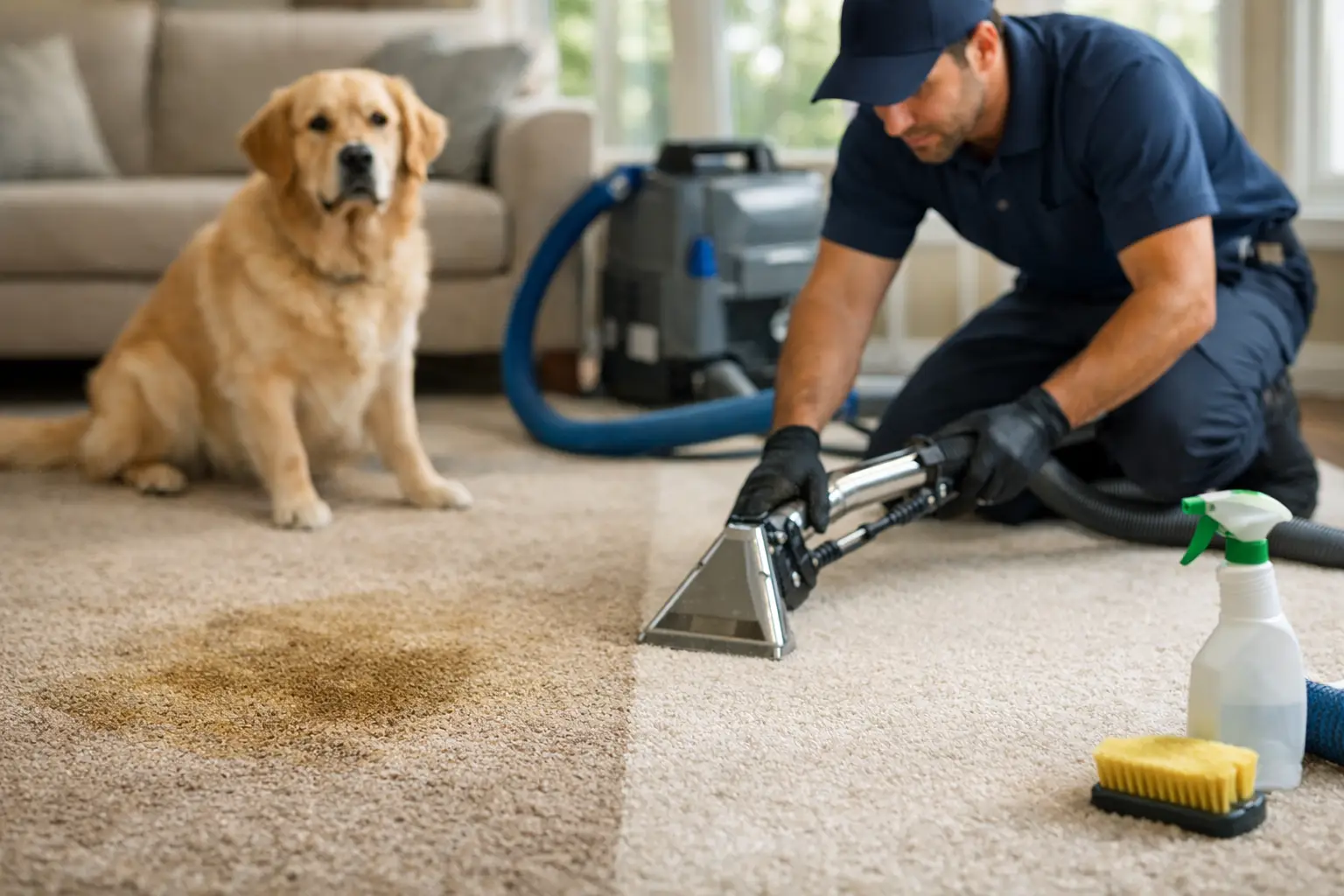
A carpet can look clean after a pet accident and still hold the source of the odor underneath. That is why real pet urine carpet cleaning results are about more than removing a visible yellow spot. The job is successful when the stain is treated, the odor source is addressed, and your carpet is left fresh, safe, and comfortable for the people and pets who live on it.
For families in Summerville and across the Lowcountry, this distinction matters. Our warm, humid South Carolina weather can make old urine odors seem to return, especially after a rainy stretch or when the indoor humidity rises. What feels like a mystery is usually a sign that urine crystals remain below the carpet fibers.
What Good Pet Urine Carpet Cleaning Results Look Like
A professional result should be easy to notice, but it should not be judged only by the appearance of the carpet right after cleaning. You should expect the treated area to look cleaner and more even in color, with little to no remaining stain if the urine has not permanently changed the dye in the carpet. More importantly, the room should smell neutral after the carpet has fully dried.
The phrase “fully dried” matters. Freshly cleaned carpet may have a mild clean-water or treatment-product scent for a short time. That is different from the sharp ammonia smell or sour, musty odor associated with pet urine. Once dry, the room should not smell worse when the air conditioner cycles on, when the weather turns humid, or when someone gets close to the treated area.
Good results also mean the carpet is not left soaked. Professional truck-mounted steam cleaning removes far more moisture and soil than a rental machine, helping carpet dry efficiently and reducing the chance of lingering dampness. You should see revived carpet fibers, cleaner traffic lanes, and no sticky residue that attracts dirt back to the same spot.
There are honest limits, though. A pet accident that sat for months, was repeatedly covered with store-bought cleaners, or soaked through to the pad and subfloor may require deeper odor treatment. In some cases, permanent discoloration remains even after the odor is eliminated. A dependable cleaning company will explain that difference before promising a perfect cosmetic repair.
Why Pet Urine Odor Can Return After Cleaning
Pet urine is not a surface-only problem. When urine reaches the carpet, it can travel through the face fibers, backing, pad, and sometimes the floor beneath. As the liquid dries, it leaves behind concentrated crystals. Humidity can reactivate those crystals and release odor again.
This is especially common in busy homes with puppies, senior pets, or a favorite repeat spot near a doorway, sofa, or bedroom wall. The visible stain may be small, while the affected area below the carpet is much larger. Scrubbing the top fibers may improve the look for a day or two without reaching the material that is actually holding the odor.
Over-the-counter odor sprays can also create a frustrating cycle. Some products perfume the area instead of breaking down the odor source. Others leave residue that makes professional rinsing more difficult later. A home cleaner can be useful for a fresh, small accident when used correctly, but repeated or old odors need a more complete approach.
How Professional Pet Odor Treatment Works
Professional treatment begins with finding the affected areas. That may involve visual inspection, odor detection, moisture checks, and specialized lighting when appropriate. Locating the true boundaries is essential because treating only the center of the stain is often not enough.
The next step is targeted treatment. A qualified technician applies pet-safe, green-certified solutions designed to break down urine contamination rather than cover it with fragrance. The treatment needs time to work, and the method should match the severity of the problem. Light surface spots can respond well to topical treatment and hot-water extraction. Deep, repeated contamination may require treatment that reaches the backing and pad.
After treatment, truck-mounted steam cleaning flushes loosened soil and residue from the carpet. Strong extraction is a major part of the result. It helps remove moisture and contaminants while leaving the carpet cleaner, softer, and ready to dry.
When urine has reached the subfloor, the best solution depends on the flooring material, how often the area was used, and whether the pet is still having accidents. A technician may recommend more extensive treatment, pad replacement, or subfloor sealing in severe cases. That is not an upsell for its own sake. It is the practical path when the odor source is below a carpet that can no longer be fully treated from above.
The Difference Between Stain Removal and Odor Removal
Homeowners often use these terms interchangeably, but they are two separate goals. Stain removal is about appearance. Odor removal is about contamination. You can have one without the other.
For example, a pale stain may remain after a pet accident has permanently altered carpet dye, particularly on light-colored carpet. The odor can still be successfully treated. On the other hand, a carpet can look nearly perfect after a quick spot cleaning while urine residue remains below it.
The best outcome is both a cleaner appearance and a neutral-smelling room, but a trustworthy professional will set expectations based on the carpet’s age, fiber type, stain history, and the depth of the urine. That kind of straightforward guidance protects your home and helps you make the right decision for your budget.
Getting Better Results Before and After Your Appointment
If you find a fresh accident, blot it with clean white towels. Press down firmly and replace the towels as they absorb moisture. Avoid rubbing, which can spread the urine deeper and damage carpet fibers. Skip bleach, ammonia-based products, and heavily scented sprays. Ammonia can smell similar to urine to some pets and may encourage repeat marking.
Before a professional visit, make a note of any known accident areas, even if you cannot see a stain. Let the technician know whether the odor seems stronger after rain, on humid days, or near a particular piece of furniture. That information can reveal repeated contamination and help guide the inspection.
After cleaning, give treated carpet time to dry before deciding on the final result. Keep pets away from damp areas when possible, use ceiling fans or your HVAC system for airflow, and follow the technician’s care instructions. If an odor remains after drying, report it promptly. A satisfaction-focused company should want the opportunity to assess the area and stand behind the work.
Protecting Carpet in Pet-Friendly Lowcountry Homes
Prevention is easier than repeat restoration, particularly in homes with wall-to-wall carpet. Regular professional cleaning removes tracked-in soil and pet dander that can make carpet hold odors more readily. A carpet protector can also help spills stay closer to the surface, giving you more time to blot accidents before they sink in.
For homes in Nexton, Cane Bay, Goose Creek, Ladson, Moncks Corner, and North Charleston, routine care is especially helpful during high-humidity months. Keep pet routines consistent, clean accidents quickly, and consider washable area rugs in your pet’s favorite resting places. If a pet begins returning to one spot, address both the odor and the behavior before the area becomes deeply saturated.
Carolina Green Steam pairs non-toxic, green-certified cleaning solutions with professional truck-mounted equipment to help local homeowners get beyond temporary cover-ups. The goal is simple: a cleaner carpet, a fresher home, and treatment that is safe for the family members with two legs and four.
A pet accident does not have to become part of your home’s permanent smell. When a stain or odor keeps coming back, treating the source early gives your carpet the best chance of a clean, lasting recovery.