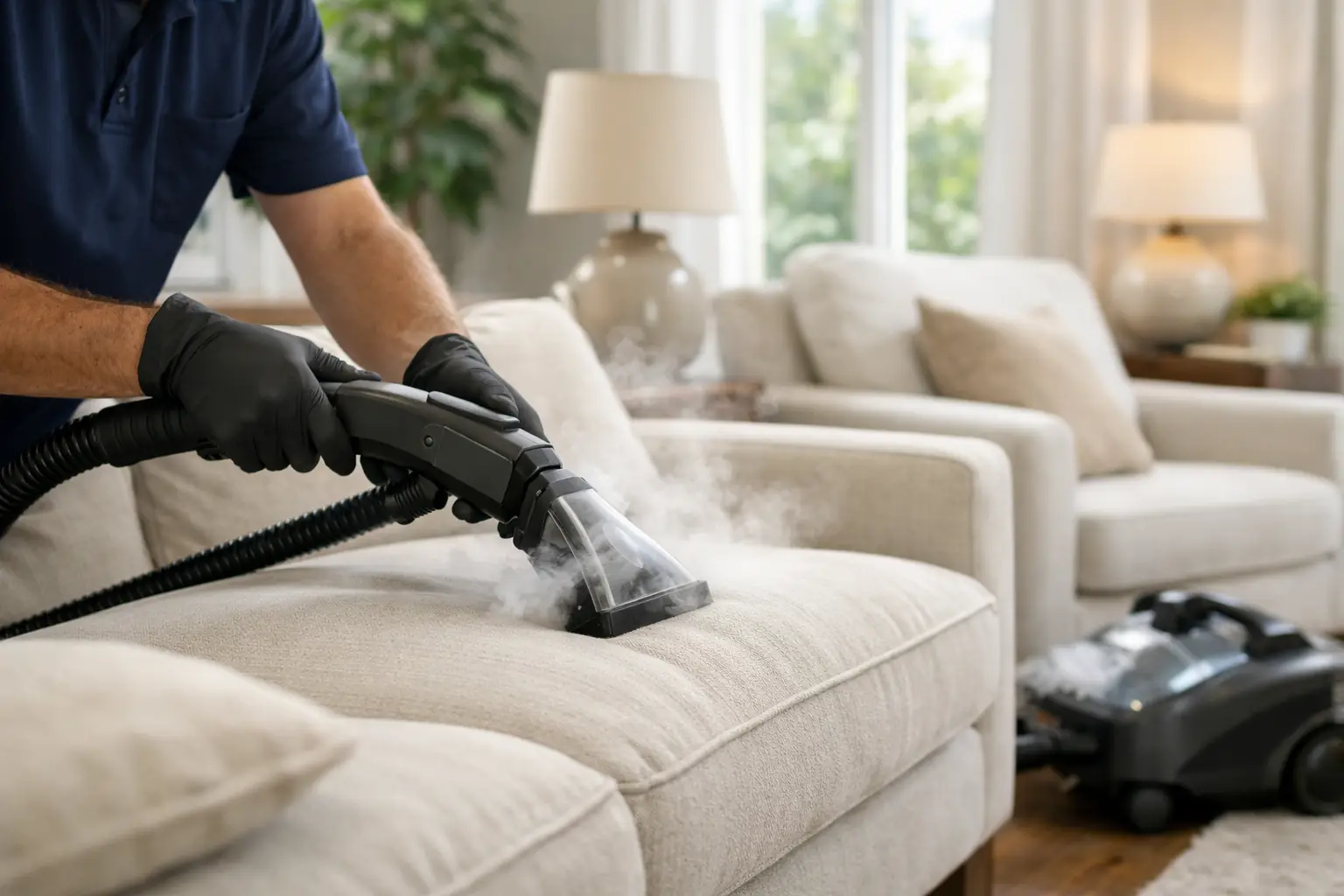
A sofa can look clean from across the room while holding weeks of pet hair, body oils, snack crumbs, pollen, and everyday soil deep in its fibers. Learning how to steam clean upholstery safely can freshen the furniture your family uses most, but the wrong heat, too much water, or an unsuitable cleaning solution can leave behind water marks, shrinkage, or a lingering musty odor.
For homeowners in Summerville and across the Lowcountry, humidity adds another concern: furniture that stays damp too long can become a problem instead of a solution. A safe approach is less about soaking the fabric and more about checking the material, using controlled moisture, and allowing plenty of drying time.
Start With the Upholstery Cleaning Code
Before bringing out a steam cleaner, find the manufacturer’s care tag. It is often tucked beneath a seat cushion, underneath the furniture, or along the back of a skirt. That small tag tells you far more than the fabric’s color or fiber content.
The cleaning code is the first decision point:
- W means the fabric can generally be cleaned with water-based products.
- S means use a solvent-based cleaner only. Steam and water can damage the material.
- WS or SW means water- or solvent-based methods may be appropriate, though a test spot is still necessary.
- X means vacuum only. Do not steam clean or apply liquid cleaner.
Do not treat these codes as suggestions. Steam cleaning an S-coded piece can cause dye bleeding, rings, stiffness, or damage to the backing beneath the fabric. If the tag is missing, the furniture is vintage, or you cannot identify the material, use caution. A professional upholstery cleaner can assess the fibers and choose the right process rather than guessing on a piece you want to keep.
Know When Steam Is Not the Right Choice
Steam is effective for many durable synthetic upholstery fabrics, but it is not a universal cleaning method. Delicate natural fibers, silk, velvet, suede, leather, and loosely woven fabrics need specialized care. Some furniture also has wood trim, glued-in components, or foam cushions that do not tolerate heat and moisture well.
Even water-safe upholstery may not need high-temperature steam. Many household machines marketed as steam cleaners produce heat that can set certain stains or affect fabric finishes. Upholstery extractors that apply a controlled cleaning solution and immediately recover it are often a better fit than a basic steam wand that releases moisture without strong extraction.
Be especially careful with heavily soiled armrests, light-colored cushions, and pieces with old pet accidents. Heat and moisture can reactivate odors if the source reached the cushion foam or frame. Surface cleaning may make the furniture look better temporarily without removing what is causing the smell.
Prepare the Furniture Before You Clean
Good results start before any moisture touches the upholstery. Remove throws, loose cushions, and detachable covers if their care instructions allow it. Then vacuum every surface thoroughly, including seams, crevices, cushion edges, and the area beneath the cushions.
This step matters because dry debris turns into mud when wet. Sand, crumbs, pet hair, and dust can also clog a machine and keep cleaning solution from reaching the fabric evenly. Use a crevice attachment along piping and under seat cushions, where oils and soil commonly collect.
Next, inspect the furniture under good lighting. Identify stains, faded areas, worn spots, and loose threads. Take note of any pre-existing damage so you do not mistake it for a cleaning issue later. If a stain is fresh, blot it with a clean white towel before cleaning. Avoid rubbing, which pushes the spill deeper and can spread it outward.
Test Before You Steam Clean Upholstery
A spot test is the most overlooked step in how to steam clean upholstery safely. Choose a small hidden area, such as the back edge of a cushion or the inside of a skirt. Apply a small amount of your intended cleaning solution or a brief pass of steam, then blot gently with a white cloth.
Wait until the area is completely dry. Look for color transfer, fading, stiffness, texture changes, or a visible water ring. If the fabric changes at all, stop. More cleaning will not correct a compatibility problem.
Use only a cleaner approved for your upholstery code and your machine. More product does not mean a cleaner sofa. Excess detergent is difficult to rinse out and can leave a sticky residue that attracts new dirt quickly. For families with children and pets, choose products designed to clean effectively without harsh chemical residue.
Use Low Moisture and Controlled Passes
If your furniture has a W or WS code and has passed the spot test, work slowly and avoid oversaturation. Fill the machine according to its instructions and use the upholstery attachment intended for fabric surfaces. Do not use a floor head or force hot steam into seams and buttons.
Start on the least visible section and clean one small area at a time. Apply moisture with one controlled pass, then make several slow drying passes to extract as much liquid as possible. The fabric should feel lightly damp, not wet. If you can press your hand into the cushion and feel moisture coming through, too much water has been used.
Avoid lingering in one spot. Repeated heat can distort fibers, create uneven color, or leave marks on delicate upholstery. Keep the tool moving in smooth, overlapping lines. For cushions, clean all sides that are visible when the furniture is assembled so the color dries consistently.
Do not forget the edges and seams, but use less moisture there. These areas often dry more slowly because fabric layers and padding overlap. Tufted furniture, thick cushions, and pillow-back sofas need extra caution because liquid can settle deep inside.
Give Upholstery Enough Time to Dry
Drying is part of the cleaning process, not an afterthought. In the Charleston-area climate, a damp couch can take much longer to dry than homeowners expect, particularly during a humid summer afternoon. Plan to clean when you can increase air circulation and leave the furniture unused for several hours.
Turn on ceiling fans, run the air conditioning, and open interior doors to improve airflow. A portable fan pointed across the upholstery can help, but avoid placing furniture in direct harsh sunlight, which can fade some fabrics. If cushions are removable, stand them on edge only if their construction allows it, so air can reach both sides.
Do not sit on the furniture until it is fully dry. Weight can compress damp fibers, transfer body oils, and create uneven drying patterns. Check cushion seams and the underside before putting everything back together. If the furniture still feels cool or damp, it needs more time.
A clean, dry fabric should smell neutral and feel soft. A sour or musty smell is a warning sign that moisture may be trapped in the padding. Keep airflow going and avoid covering the furniture until it has dried completely.
Treat Stains and Pet Odors the Right Way
Steam cleaning is helpful for general soil, but individual stains often need a more targeted approach. Grease, ink, wine, makeup, and pet accidents all behave differently. Applying heat to the wrong stain can make removal harder, especially if the stain contains protein or dye.
For pet accidents, the visible spot is rarely the whole issue. Urine can travel through upholstery fabric into cushion foam, batting, and the furniture frame. A surface cleaner may leave the odor behind, and the smell can return on humid days. Professional odor treatment uses the right solution and application method to address contamination below the surface when possible.
If you have tried several products already, resist the urge to layer another cleaner on top. Mixing products can leave residue or create discoloration. Blot, identify the fabric code, and use a fabric-safe treatment that matches the problem.
When Professional Upholstery Cleaning Makes Sense
DIY cleaning can be useful for light maintenance on a water-safe couch, especially after a minor spill. But there is a difference between freshening a surface and deep cleaning upholstery without risking the furniture underneath.
Professional service is often the better choice for large sectionals, delicate fabrics, persistent odors, heavy soil, pale upholstery, or furniture with unknown care instructions. Truck-mounted equipment offers stronger soil removal and moisture recovery than many rental or consumer machines, which helps upholstery dry more thoroughly. It also allows a trained technician to adjust the process based on fabric type, condition, and the source of the problem.
For homeowners in Summerville, Nexton, Cane Bay, Goose Creek, Ladson, and nearby communities, Carolina Green Steam provides professional upholstery cleaning with green-certified products that are safe for families and pets. We stand behind every job with a 100% satisfaction guarantee because your favorite chair or family sofa deserves careful treatment, not a one-size-fits-all method.
Your upholstery does not have to look visibly dirty before it needs attention. A regular vacuuming routine, fast response to spills, and professional cleaning when soil or odors build up can help protect the furniture you use every day and keep your home feeling comfortable, clean, and ready for company.