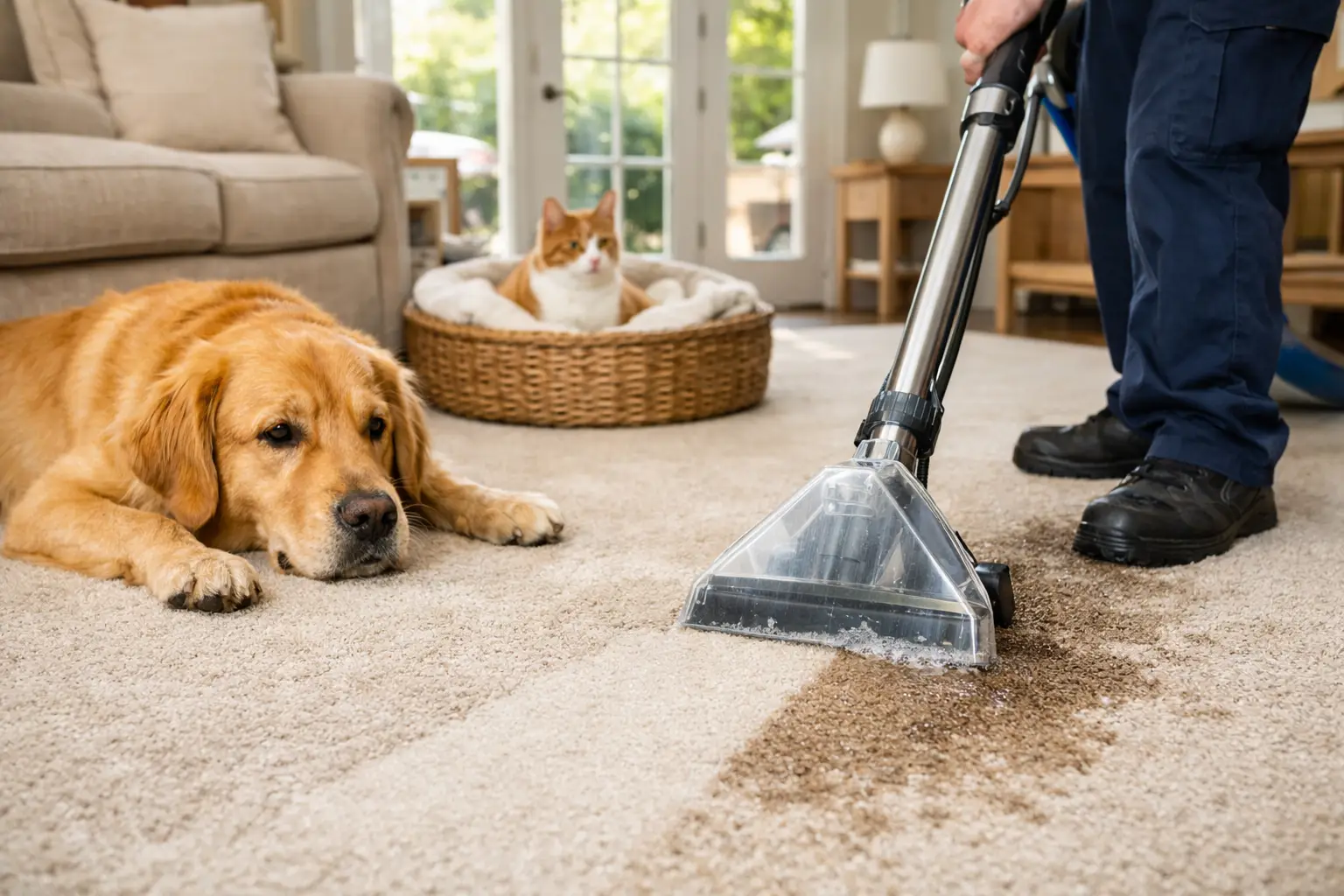
A pet accident behind the sofa can seem handled until a humid Lowcountry afternoon brings the smell right back. Learning how to remove pet odor from carpet means treating more than the spot you can see. Urine can soak through carpet fibers, into the padding, and sometimes into the subfloor beneath it.
That is why a quick spray of deodorizer may make the room smell better for a day, then fail when moisture or warm weather activates the odor again. The good news is that many recent accidents can be addressed safely at home. Older, repeated, or deeply soaked odors may need professional treatment to fully restore the room.
Why Pet Odor Comes Back After Cleaning
Pet urine contains compounds that do not disappear when the liquid dries. As residue remains in the carpet, it can release odor again when humidity rises. That is especially frustrating for homeowners in Summerville, Nexton, Cane Bay, and throughout the Charleston area, where indoor moisture can make an old pet spot noticeable again.
The visible stain is not always the full problem. A pet may return to the same location, and each accident can spread farther than the last. Carpet padding acts like a sponge, so cleaning only the surface may leave odor-causing residue underneath.
Pet odor also is not limited to urine. Damp fur, tracked-in dirt, vomit, and lingering dander can all affect how a carpet smells. Still, urine is usually the source of the sharp, persistent odor that resists ordinary carpet sprays.
How to Remove Pet Odor From Carpet at Home
Start by identifying the full affected area. If the accident is fresh, the damp spot may be obvious. For older odors, use your nose close to the carpet or inspect the room with a UV flashlight in a darkened space. A UV light can reveal many urine deposits, although it can also react to other household residues. Treat it as a helpful clue, not a perfect diagnosis.
Blot Fresh Accidents Before They Spread
For a new accident, press clean white towels firmly into the carpet to absorb as much liquid as possible. Stand on the towels if needed, then replace them until they come up nearly dry. Avoid scrubbing. Scrubbing pushes urine deeper into the fibers and can spread it outward.
If you have a wet-dry vacuum designed for liquid pickup, it can help remove more moisture. Do not use a regular household vacuum on wet carpet. Once the excess liquid is removed, you are ready to treat the residue that causes the smell.
Use an Enzyme Cleaner the Right Way
For pet urine, an enzyme-based cleaner is often the most effective DIY option. These products are made to break down the organic residue that feeds odor. Choose one clearly labeled for pet urine and safe for your carpet type, then test it in an inconspicuous area first.
The key is using enough solution. If urine reached the carpet pad, a light mist on the surface will not reach the source. Apply the product according to its instructions so it reaches approximately the same depth as the original accident. Let it sit for the full recommended dwell time. Rushing this step is one of the main reasons homeowners do not get the result they expected.
Keep children and pets away from the treated area while it works and dries. A family- and pet-conscious product is a smart choice, but it still needs to be used exactly as directed. Never mix cleaning products. Combining an enzyme cleaner with bleach, ammonia, vinegar, or another solution can reduce its effectiveness or create an unsafe mess.
Rinse Lightly and Dry the Carpet Completely
After the cleaner has had time to work, blot away excess moisture. If the product instructions allow rinsing, use only a small amount of clean water and extract it thoroughly with a carpet spot cleaner or wet-dry vacuum. Overwetting the carpet can create a new problem by encouraging mildew or leaving a musty smell.
Drying matters in South Carolina. Run ceiling fans, place a fan across the damp area, and use air conditioning or a dehumidifier if needed. The carpet should feel dry to the touch before furniture goes back in place. If the odor remains after the carpet is fully dry, repeat treatment once rather than layering multiple products over the same area.
Common Fixes That Often Disappoint
Baking soda can absorb some surface odor, but it does not reliably break down urine that has soaked into carpet backing or padding. It can be useful as a minor finishing step after proper treatment, but it should not be the main solution for a strong urine smell.
Vinegar is another popular home remedy. It may temporarily cut certain odors, yet it is not a substitute for an enzyme treatment. Vinegar can also affect some carpet fibers or dyes, particularly if used heavily or repeatedly.
Fragranced sprays are usually the fastest way to hide the problem, not solve it. A room may smell like perfume and pet odor at the same time, which is not the fresh, healthy result most homeowners want. Likewise, renting a carpet machine can improve overall appearance, but extraction alone may not remove a deep odor source unless the urine deposits have been treated first.
When Professional Pet Odor Treatment Is the Better Choice
DIY treatment is most successful with a recent, isolated accident that has not reached the pad. It is time to call a professional when odors return after cleaning, your pet has repeatedly used the same area, or the smell becomes stronger on humid days. These are signs that the source may be below the carpet surface.
A professional can assess whether odor treatment needs to reach the backing and padding, rather than simply clean the top fibers. Truck-mounted steam cleaning equipment also provides stronger extraction than most home machines, helping remove the moisture, soil, and treatment residue left behind during repeated DIY attempts.
For homeowners in Summerville, Goose Creek, Ladson, North Charleston, Moncks Corner, and nearby communities, Carolina Green Steam provides professional pet odor treatment with green-certified cleaning solutions that are safe for your family and pets. The goal is not to cover the smell with fragrance. It is to address the source while treating your home with the care it deserves.
In severe cases, especially where a pet has repeatedly marked one spot for months or years, carpet padding may need replacement. If urine reached a wood subfloor, the subfloor may also need sealing after cleaning. That is not the outcome anyone wants, but identifying it early can prevent repeated cleaning costs and ongoing odor.
Keep Your Carpet Fresher After Treatment
Once the odor is gone, prevention protects both your carpet and your investment. Take pets out on a consistent schedule, clean accidents immediately, and watch for repeat marking near doors, furniture corners, or previous accident areas. If accidents are becoming frequent, a veterinarian can help rule out a health issue.
Regular professional carpet cleaning also helps remove pet hair, dander, tracked-in soil, and oils that contribute to an overall pet smell. A carpet protector can make future spills and accidents easier to remove, although it does not make carpet waterproof or replace prompt cleanup.
If you use washable pet beds, blankets, or area rugs, clean them too. Otherwise, a lingering odor from nearby fabrics can make a freshly cleaned carpet seem like it still has a problem. Check upholstery around your pet’s favorite sleeping spots as well.
Questions Homeowners Often Ask
Can steam cleaning remove pet urine odor?
It can help, especially when paired with the right odor treatment and strong extraction. Steam cleaning alone may not resolve urine that has reached the padding or subfloor. The treatment needs to contact the odor source before or during the cleaning process.
How long does pet odor treatment take to dry?
Dry time depends on humidity, carpet thickness, airflow, and how deeply the area needed treatment. Many carpets dry within several hours, but a heavily treated area can take longer. Good airflow makes a meaningful difference in the Charleston area’s humid climate.
Why does my carpet smell worse after cleaning?
Cleaning can reactivate dried urine residue, making an old problem easier to notice temporarily. If the smell does not fade as the carpet dries, the original treatment likely did not reach all affected layers. A deeper inspection and professional odor treatment may be needed.
A clean-smelling home should not depend on candles, cover-up sprays, or keeping one room closed off. Treat a fresh accident quickly, give enzyme products time to work, and do not wait too long to get help when the odor keeps returning. Your carpet, your pets, and the people who share your home will be better for it.