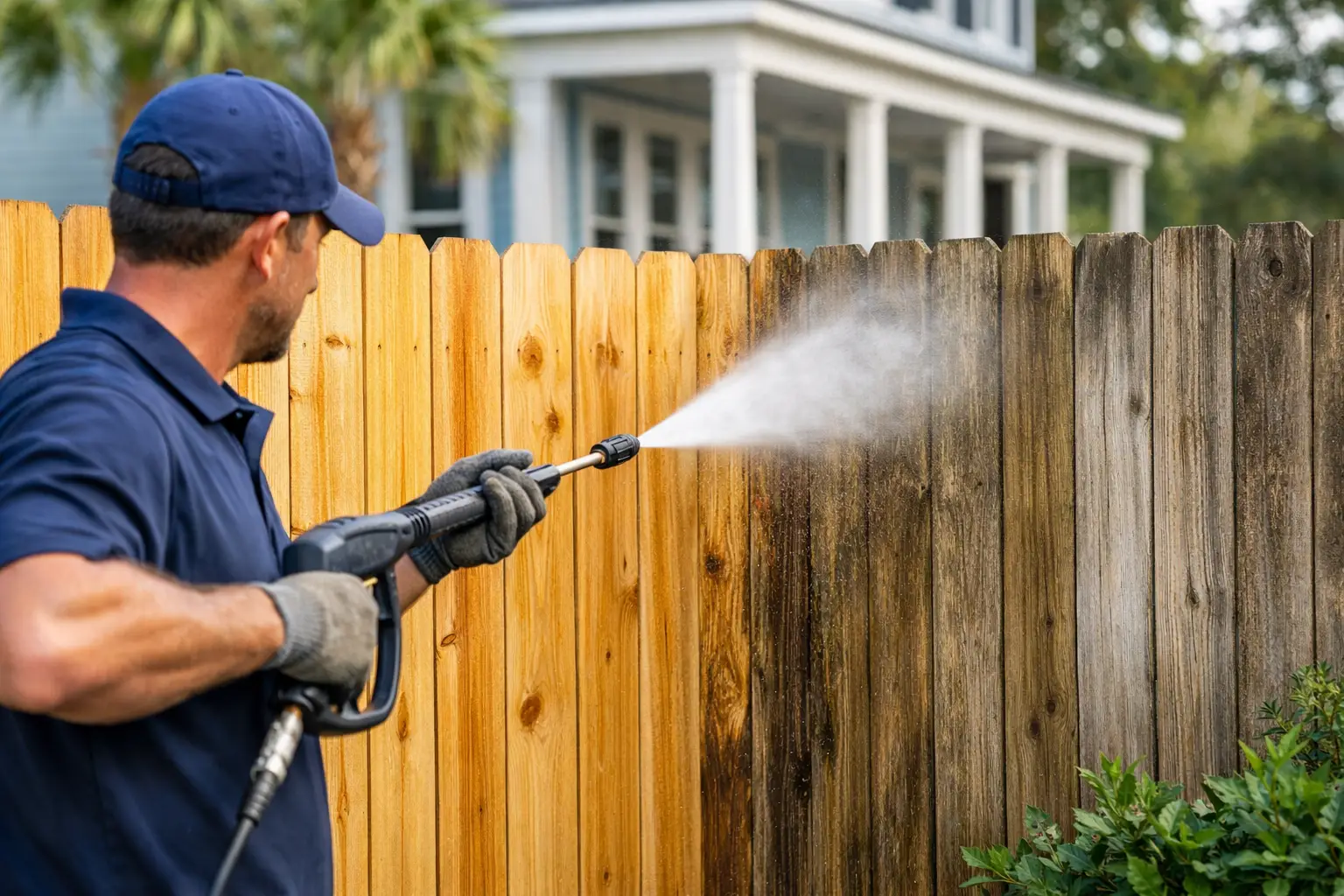
A fence can make an otherwise well-kept yard look neglected fast. In Summerville and across the Lowcountry, humidity, pollen, rain, and shade create the perfect conditions for green algae, mildew, mud stains, and gray weathering. Homeowners often pressure wash fences to bring back a cleaner, brighter look, but the wrong technique can scar wood, force water behind boards, or leave permanent striping.
The goal is not simply to blast away dirt. It is to clean the fence thoroughly while protecting the material that gives your yard privacy, structure, and curb appeal. For many homes in Nexton, Cane Bay, Goose Creek, Ladson, and surrounding communities, a properly cleaned fence can make the whole property feel cared for again.
When Should You Pressure Wash Fences?
Most fences benefit from professional cleaning about once a year, although the right schedule depends on shade, tree coverage, nearby irrigation, and the fence material. A fence bordering a wooded lot or a damp area may develop algae much faster than one in full sun.
Watch for green or black growth, dull gray boards, pollen buildup, mud splash marks, and dark streaks beneath fence caps. These are more than cosmetic issues. Algae and mildew hold moisture against the surface, which can contribute to premature wear on wood and make vinyl fencing look permanently discolored if ignored for too long.
Spring is a popular time for fence cleaning because homeowners are preparing patios, pools, and outdoor living areas for use. Fall can also be a smart choice after a long South Carolina summer has left behind pollen, leaves, and moisture-driven growth. The best day is dry and mild enough to allow the fence to dry completely after cleaning.
Not Every Fence Needs High Pressure
“Pressure washing” is often used as a catch-all term, but pressure is only one part of a safe cleaning process. The correct water pressure, nozzle, cleaning solution, and technique change based on the fence itself.
Wood fences require a lighter touch
Wood is the most common material that gets damaged by aggressive washing. Too much pressure can carve soft areas of the grain, create fuzzy fibers, loosen knots, and leave a striped appearance that becomes even more obvious once the wood dries. Older cedar, pine, and pressure-treated boards can be especially vulnerable.
For wood, controlled low pressure and a fence-safe cleaning solution are usually the better approach. The cleaner does much of the work by loosening algae and organic buildup. Water should then be applied evenly, keeping a consistent distance from the boards and following the grain rather than cutting across it. If the fence needs staining or sealing afterward, it must be given enough time to dry first.
Vinyl fences need cleaning, not force
Vinyl fencing does not rot, but it still collects algae, mildew, pollen, and red clay splatter. High pressure can drive water into seams, damage aging sections, or leave marks if the nozzle is held too close. A controlled soft washing approach is generally safer and more effective for vinyl.
The right solution helps lift the biological growth that causes the green film. A gentle rinse removes the residue without roughing up the surface. This matters on bright white vinyl fences, where uneven cleaning is easy to spot from across the yard.
Composite and painted fences need testing first
Composite, painted, and stained fences can vary widely by manufacturer and condition. Some finishes tolerate a careful rinse; others may fade, peel, or lose their protective coating when exposed to the wrong cleaner or too much pressure. A small test area is the responsible first step.
If paint is already flaking or boards are soft and splintering, washing may reveal damage that was hidden beneath the buildup. Cleaning can still improve the appearance, but it is not a replacement for repair or refinishing.
What Makes Fence Cleaning in the Lowcountry Different?
Charleston-area weather is hard on exterior surfaces. Long humid stretches, summer storms, coastal moisture, and heavy spring pollen mean fences can become dirty much sooner than homeowners expect. Even a fence that looked clean in March may have green growth by late summer, especially along the shaded side of the property.
Irrigation can add to the problem. Sprinklers that repeatedly hit the same fence line keep the surface damp and can leave mineral marks. Landscaping also plays a role. Shrubs and vines pressed against fence boards restrict airflow, allowing moisture and mildew to linger.
A good cleaning service looks at the cause as well as the visible dirt. Trimming vegetation back, adjusting sprinkler heads, and keeping mulch or soil from piling against the fence can help the cleaned surface stay cleaner longer. There is no excuse for treating repeat algae growth as a mystery when the moisture source is right there.
Why DIY Fence Washing Can Go Wrong
Renting a pressure washer seems straightforward until the first pass leaves a visible line in the wood. The equipment is powerful, and the temptation to move closer when a stain does not disappear immediately is understandable. Unfortunately, that is often when damage happens.
Common DIY mistakes include using too narrow of a nozzle, applying pressure too close to the fence, working unevenly, and relying on harsh chemicals that can harm nearby grass or landscaping. Homeowners may also skip pre-treatment, which means they use extra force to remove buildup that a properly selected cleaner would have loosened first.
There is also the cleanup factor. Fence washing sends dirty runoff, algae residue, and cleaning solution into surrounding beds, patios, windows, and siding if the work is not planned carefully. Nearby plants should be protected and rinsed as needed, while gates, hardware, and delicate painted surfaces deserve extra attention.
For a small, newer vinyl section, a homeowner may be comfortable doing a gentle rinse. For weathered wood, a large privacy fence, or heavy algae growth, professional service is usually the safer investment. The difference is not just equipment. It is knowing when to reduce pressure, when to soft wash, and when a surface needs more care than force.
A Safer Process for Cleaning a Fence
Professional fence cleaning starts with inspection. Loose boards, popped nails, cracked vinyl, peeling stain, and weak gate hardware should be identified before water is applied. This helps set realistic expectations and prevents a pre-existing issue from becoming worse.
Next comes surface preparation. Furniture, planters, and delicate items should be moved away from the fence. Plants and grass near the work area are protected and pre-wet when appropriate. The cleaning method is then matched to the material and level of buildup.
For many fences, a safe cleaning solution is applied first to break down algae, mildew, and embedded grime. After it has had time to work, the fence is rinsed with controlled water flow. Cleaners work in manageable sections to avoid dry lines and inconsistent results. The final step is a close look for missed areas, particularly around posts, caps, gate edges, and the lower boards where dirt tends to collect.
At Carolina Green Steam, that careful approach matters. Families should not have to choose between a cleaner property and unnecessary exposure to harsh chemicals. Exterior cleaning should protect the surfaces around your home, your landscaping, and the people and pets who use the yard.
After Cleaning: Help Your Fence Stay Clean Longer
A clean fence is easier to maintain than a heavily stained one. Once it is dry, take a few minutes to inspect the area around it. Keep leaves from collecting at the base, trim back plants that hold moisture against boards, and make sure sprinklers are not soaking the same panels every day.
Wood fences may also benefit from a quality stain or sealant after proper drying time. This can slow moisture absorption, reduce UV weathering, and make future cleaning easier. It depends on the wood’s condition and the finish you want, but sealing is often worthwhile for a fence that has been restored from a dull, gray appearance.
If you are preparing a home for sale in North Charleston, hosting family in Moncks Corner, or simply tired of seeing green buildup outside your Summerville windows, fence cleaning is one of those practical improvements that changes the feel of the entire yard. A careful wash can bring back the clean boundary your home deserves without taking shortcuts on safety or surface protection.