Your bathroom grout can look gray again just weeks after a deep clean, especially in the warm, humid Lowcountry. The good news is that learning how to clean grout without bleach does not mean settling for weak results. With the right cleaner, a little dwell time, and a brush that reaches into the grout lines, homeowners can remove everyday soap scum, tracked-in dirt, and surface mildew without filling the room with harsh fumes.
For families with children and pets in Summerville, Nexton, Cane Bay, and across the Charleston area, bleach-free cleaning is often the better first choice. It is gentler on indoor air, avoids the sharp chlorine odor, and reduces the chance of accidentally damaging nearby surfaces or mixing incompatible products.
Start by identifying what is on the grout
Not all dirty grout needs the same treatment. In kitchen floors, the problem is usually oily residue and fine soil carried in from outdoors. In showers, it is more often a mix of soap film, body oils, moisture, and mildew. A dark stain that remains after cleaning may also be old discoloration beneath the surface, not active mold.
This distinction matters because scrubbing harder is not always the answer. The right cleaning solution needs time to break down the soil before you brush. Aggressive scrubbing with the wrong tool can roughen grout, wear away sealant, or scratch glazed tile.
Before using any method, vacuum or sweep the tile floor and rinse shower walls with warm water. Removing loose debris first keeps you from grinding grit into the grout as you work.
How to clean grout without bleach with baking soda
A baking soda paste is a dependable option for lightly to moderately dirty grout. It is inexpensive, low-odor, and particularly useful in bathrooms where you want more control over where the cleaner goes.
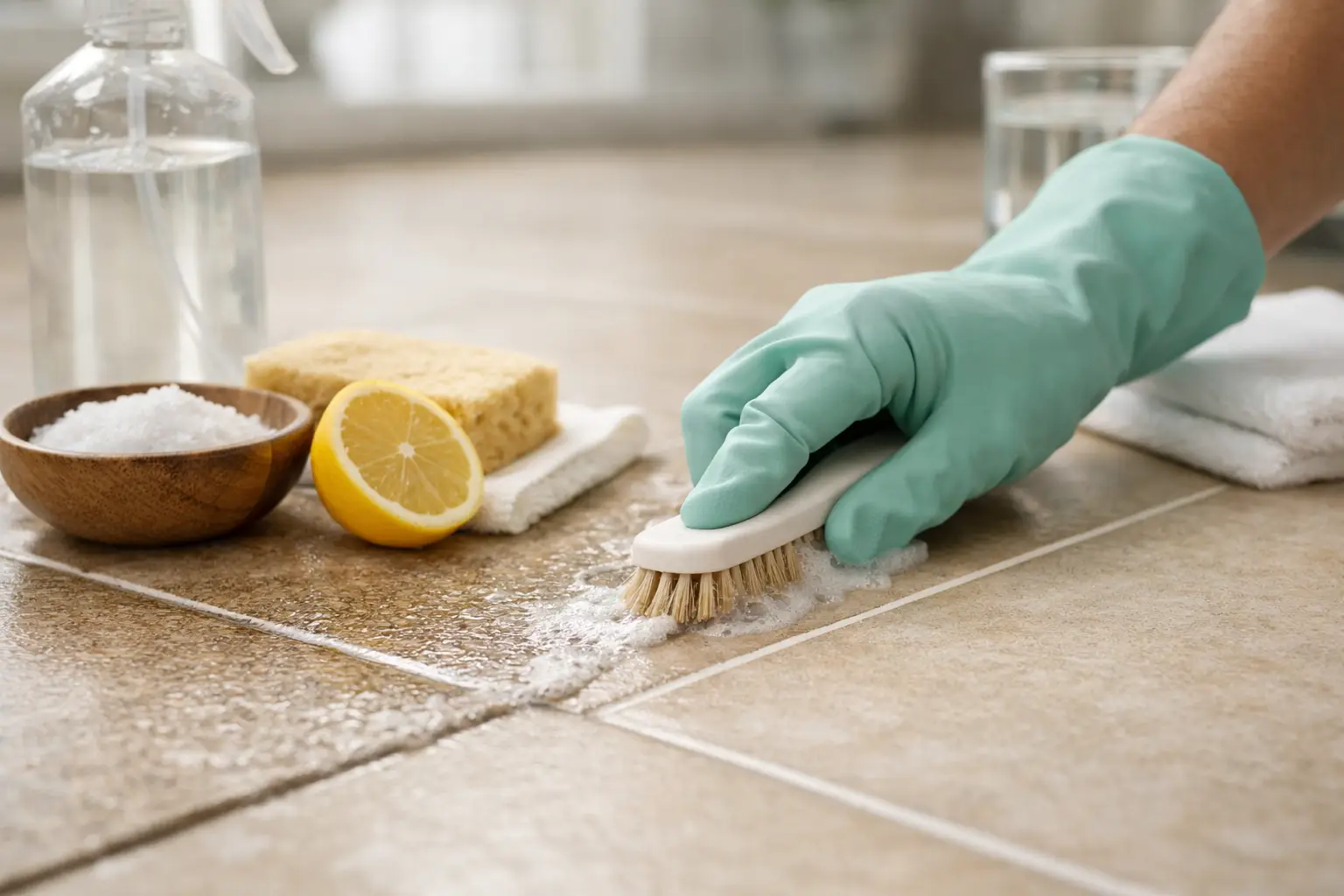
Mix baking soda with just enough water to form a spreadable paste. Apply it directly to the grout lines, let it sit for 10 to 15 minutes, then scrub with a stiff nylon grout brush or an old toothbrush reserved for cleaning. Rinse thoroughly with warm water and dry the area with a microfiber cloth.
For a kitchen floor, add a small amount of mild dish soap to the paste. The soap helps release greasy residue that baking soda alone may not fully lift. Work in manageable sections so the paste does not dry out before you have a chance to scrub and rinse it away.
Baking soda works best on surface buildup. If grout is deeply stained or has not been cleaned in years, it may brighten the lines without restoring them completely. That is not a failure of the method. It is a sign that dirt has settled deeper into the porous grout.
Use hydrogen peroxide carefully for stubborn stains
Three-percent hydrogen peroxide can help with stubborn organic stains and dingy shower grout. Apply a small amount to the grout or combine it with baking soda to make a paste. Let it sit for five to 10 minutes, scrub gently, and rinse well.
Always test first in an inconspicuous spot, particularly if your grout is colored. Peroxide can lighten some pigments when used repeatedly or left in place too long. Keep pets and children out of the area until the floor or shower is fully rinsed and dry.
Do not mix peroxide with vinegar, bleach, ammonia, or other cleaners. Combining household chemicals can create irritating or unsafe fumes. One product at a time, followed by a complete rinse, is the safe approach.
Try a pH-neutral tile and grout cleaner
For routine upkeep, a pH-neutral tile and grout cleaner is often the simplest choice. These products are designed to loosen common soil without the harshness associated with chlorine bleach or highly acidic formulas. They are a smart fit for ceramic and porcelain tile, as well as homes where family and pet safety is a priority.
Follow the label directions instead of assuming more cleaner means better results. Spray or apply the product, give it the recommended dwell time, scrub the grout lines, and rinse with clean water. In many cases, the waiting period does more of the work than the brushing.
A pH-neutral cleaner is not always enough for heavy grease or mildew staining, but it is an excellent maintenance product. Using it weekly in frequently used showers can prevent the buildup that turns a quick job into a weekend project.
Be cautious with vinegar, especially around natural stone
Vinegar is often suggested as a bleach-free grout cleaner, but it is not a universal solution. It can be useful in small amounts on ceramic or porcelain tile when soap scum is the main issue. However, its acidity can damage natural stone such as marble, travertine, limestone, and certain types of slate. It may also weaken unsealed or aging grout over time.
If you have natural stone tile, skip vinegar completely and choose a stone-safe, pH-neutral cleaner. If you are unsure what material is installed, treat it as stone until you can confirm otherwise. This is especially important in older Charleston-area homes, where original tile or specialty stone may need more careful care.
Even on porcelain tile, never combine vinegar with any other cleaner. Rinse the area completely after use, and avoid making it your everyday method.
Use the right brush and technique
The goal is to clean the grout, not grind it away. Choose a nylon grout brush with firm bristles. Avoid wire brushes, metal scouring pads, and overly abrasive powders, which can scratch tile and erode the grout joints.
Scrub back and forth along the grout line with moderate pressure. For shower walls, begin at the top and work down so dirty runoff does not streak over areas you already cleaned. For floors, start in the farthest corner and work toward the door.
After scrubbing, remove the loosened soil with clean water and a microfiber cloth, mop, or wet vacuum. Leaving cleaner residue behind can attract dirt and make the grout look dull again sooner.
Prevent mildew and grime from coming back
In humid South Carolina bathrooms, prevention is part of grout care. Run the exhaust fan during showers and for at least 20 minutes afterward. If your bathroom has poor ventilation, open the door once the room is no longer in use and wipe down wet shower walls with a squeegee or towel.
On tiled floors, regular sweeping and damp mopping keep abrasive sand and outdoor soil from settling into grout. This matters for busy homes with dogs, kids, and frequent guests. Entry mats and a quick weekly floor clean can make a noticeable difference in homes from Goose Creek and Ladson to North Charleston and Moncks Corner.
Once grout is fully clean and dry, consider sealing it if it is cement-based and unsealed. A quality grout sealer helps resist moisture and staining, but it is not permanent. It needs periodic renewal based on traffic, moisture exposure, and the product instructions.
When DIY grout cleaning is not enough
If your grout remains dark after several careful cleaning attempts, has widespread staining, or shows recurring mildew, professional equipment may be the better answer. Home methods can clean the surface, but they cannot always extract embedded soil from porous grout or restore a large tiled area evenly.
Professional tile and grout cleaning uses controlled heat, specialized solutions, and extraction to remove the grime that brushes leave behind. It can be especially worthwhile before listing a home, after a renovation, or when a once-clean bathroom or kitchen has started to make the entire room feel worn down.
Carolina Green Steam provides professional tile and grout cleaning for homeowners throughout Summerville and the surrounding Lowcountry, using a family- and pet-conscious approach backed by dependable service. A professional cleaning can also give you a clean starting point for easier maintenance going forward.
Clean grout should not require a cloud of chlorine fumes or a cabinet full of harsh chemicals. Start with the gentlest effective method, give the cleaner time to work, and protect the tile and grout you already have. When buildup has moved beyond a practical DIY fix, getting experienced help can bring the room back to the clean, cared-for condition your home deserves.