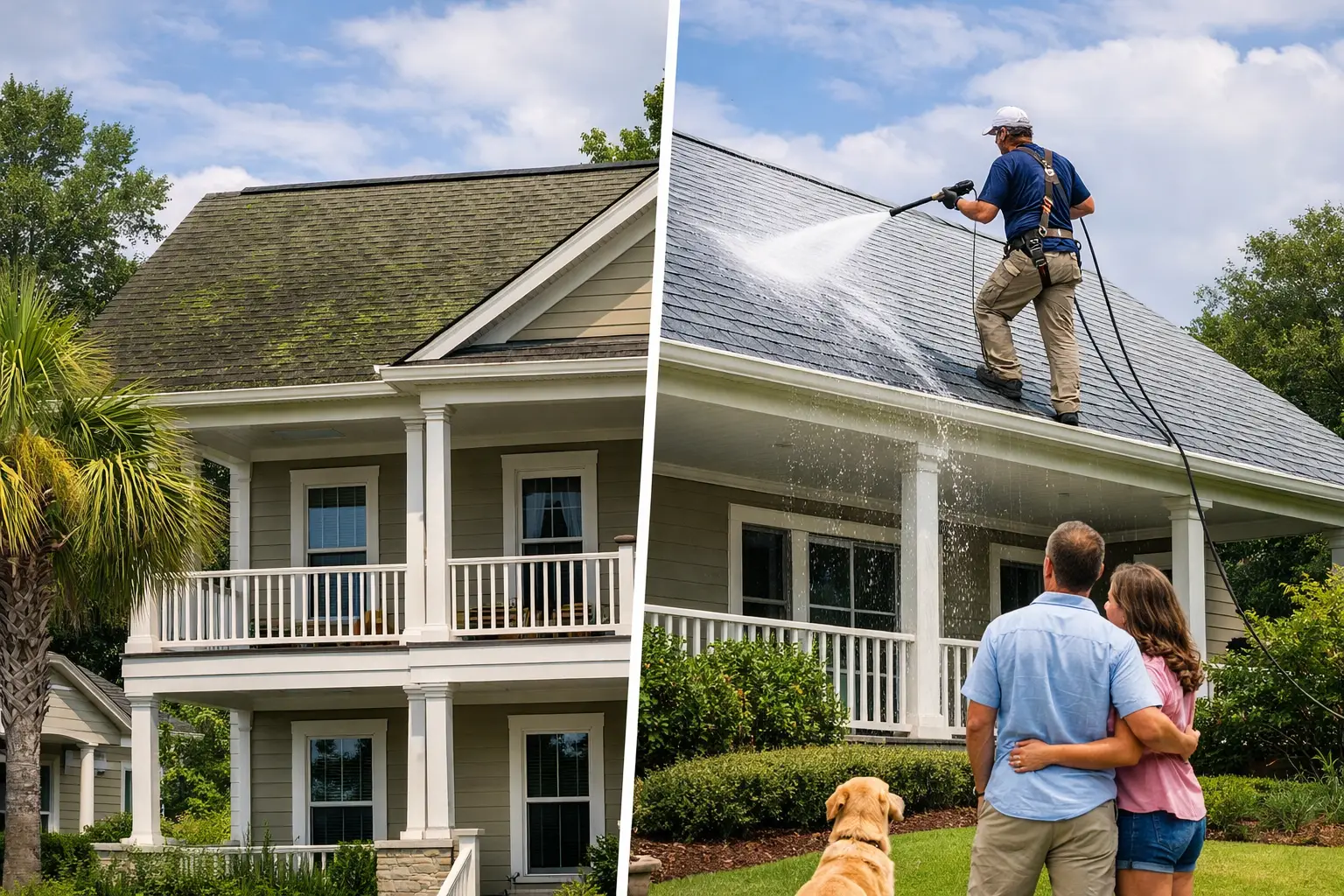
That green film spreading across your siding, roof, patio, or fence is more than a curb-appeal issue. In the warm, humid Lowcountry climate, it can take hold quickly and make a well-kept home in Summerville look neglected. So, does soft washing kill algae? When it is done correctly with the right cleaning solution and application method, yes. Professional soft washing is designed to kill algae at the source, not simply blast away the visible layer.
For homeowners in Summerville, Nexton, Cane Bay, Goose Creek, and surrounding Charleston-area communities, that distinction matters. Removing the green color for a few weeks is not the same as treating the living organic growth that caused it.
Does Soft Washing Kill Algae or Just Wash It Away?
Soft washing uses low-pressure water combined with a professional cleaning solution formulated to break down and kill algae, mildew, mold, and similar organic buildup. Unlike high-pressure washing, the main cleaning power comes from the solution, not forceful water pressure.
The cleaning solution reaches into the growth on the surface, kills it, and loosens the staining it leaves behind. After an appropriate dwell time, the surface is gently rinsed clean. On many exterior surfaces, especially vinyl siding, painted trim, stucco, screened enclosures, and roofing materials, this is a safer and more effective approach than trying to scrub or pressure-wash algae away.
High pressure can remove some visible algae, but it may leave behind spores or roots of the growth. It can also push water behind siding, strip paint, scar wood, dislodge mortar, or damage roof shingles. Soft washing addresses the biological problem while treating the surface with care.
Why Algae Keeps Coming Back in the Lowcountry
South Carolina homes give algae plenty of reasons to grow. Moisture, heat, shade, tree cover, and pollen all create favorable conditions. A north-facing wall may stay damp longer after rain. A fence near dense landscaping may receive little sunlight. Roofs under oak or pine trees can collect debris that holds moisture against the shingles.
In communities from Ladson and North Charleston to Moncks Corner and Charleston, it is common to see algae return eventually. That does not mean the original cleaning failed. It means the exterior is continuously exposed to the same humid conditions that allowed the growth in the first place.
Soft washing can dramatically improve the appearance of your home and slow regrowth, but it is not a permanent force field against weather and moisture. Most homes benefit from routine exterior maintenance based on shade, landscaping, roof pitch, nearby trees, and how quickly growth returns.
The Green, Black, and Dark Stains You May See
Green buildup is often algae. Black staining on a roof is frequently a type of algae that feeds on the limestone filler in shingles, while dark streaks on siding may also involve mildew or mold. These growths can look similar to a homeowner, but the best treatment and the safest water pressure depend on the surface.
That is why one-size-fits-all pressure washing is risky. A concrete driveway can tolerate a very different process than a painted porch ceiling or an asphalt shingle roof.
Where Soft Washing Works Best
Soft washing is especially useful on delicate exterior materials where high pressure could cause expensive damage. It is commonly used for house washing and roof cleaning, as well as exterior areas such as fences, decks, gutters, soffits, and screened patios.
For vinyl siding, soft washing removes algae from the textured surface and seams without driving water behind the panels. On painted surfaces, it helps lift biological growth without aggressively stripping the finish. For roofs, low-pressure application is essential because high pressure can remove protective shingle granules, shorten roof life, and potentially affect warranties.
Concrete, driveways, and patios are a little different. Those tougher surfaces may benefit from a combined approach: a cleaning solution to treat algae and other organic stains, followed by surface-appropriate pressure washing to remove embedded dirt. The right method depends on the condition of the concrete and the type of staining present.
Is Soft Washing Safe for Your Home, Family, and Landscaping?
It can be, but professional technique matters. Exterior cleaning solutions are selected and diluted for the job at hand, then applied carefully to avoid unnecessary contact with plants, outdoor furniture, and surrounding surfaces. A responsible cleaning team prepares the work area, pre-wets landscaping when appropriate, controls runoff, and thoroughly rinses treated areas.
Homeowners should be cautious about DIY chemical mixes and rental pressure washers. A product that seems harmless on a small patch of siding can discolor surfaces, harm plants, or create runoff concerns when applied incorrectly. And too much pressure can cause immediate damage that is far more costly than a professional cleaning.
At Carolina Green Steam, our approach is to protect the property as carefully as we clean it. That means assessing the surface, the severity of algae growth, nearby landscaping, and the safest method before work begins. Families and pet owners should also keep children and pets away from the work area until the service is complete and all treated surfaces have been rinsed and dried.
How Long Does Algae Stay Away After Soft Washing?
There is no single timeline because every property is different. A sunny home with good drainage and little tree cover may stay clean much longer than a shaded home near ponds, mature trees, or heavy landscaping. In the Charleston area, many homeowners schedule house washing about once a year, while roofs and other surfaces may follow a different schedule.
You can help extend the results by trimming back branches that shade the home, keeping gutters clear, removing leaves from roof valleys, and directing sprinklers away from siding. Addressing drainage issues also helps. If water regularly splashes against the same wall or pool deck area, algae will have an easier time returning.
The goal is not to wait until every surface turns green again. Regular cleaning is usually easier on exterior materials and helps your property keep a cared-for appearance year-round.
Soft Washing vs. Pressure Washing for Algae
Both methods have a place in exterior cleaning, but they are not interchangeable. Soft washing is the preferred method for algae on roofs, siding, painted wood, and other delicate surfaces because it uses low pressure and relies on the cleaning solution to do the hard work.
Pressure washing is often better suited for durable materials such as concrete driveways, walkways, and some patios. Even then, professionals should use the correct pressure, nozzle, distance, and cleaning products. Too much pressure on concrete can leave visible wand marks or expose aggregate, especially on older surfaces.
If algae is appearing in several places around your home, the smartest plan may include both methods. Your house and roof may need soft washing, while your driveway, patio, and pool deck may need a tailored pressure-washing service. A full property assessment prevents the common mistake of using one aggressive method on every surface.
Signs It Is Time to Schedule Professional Algae Removal
The early signs are easy to overlook: faint green streaks on siding, dark areas beneath gutters, slippery spots on a patio, or black roof staining that seems to spread after each rainy season. Once algae becomes thick, it can make walkways and pool decks more slippery and make exterior cleaning more difficult.
A professional cleaning is worth considering when you notice recurring growth, have a steep or delicate roof, need to prepare a home for sale, or simply want to restore the clean appearance of your property without risking damage. For property managers, short-term rental owners, and busy families, scheduled maintenance also removes one more task from the weekend list.
Algae is part of life in the Lowcountry, but a green exterior does not have to be part of your home’s look. The right soft washing service can remove the growth safely, protect the surfaces that matter, and help your home look cared for from the curb to the backyard.