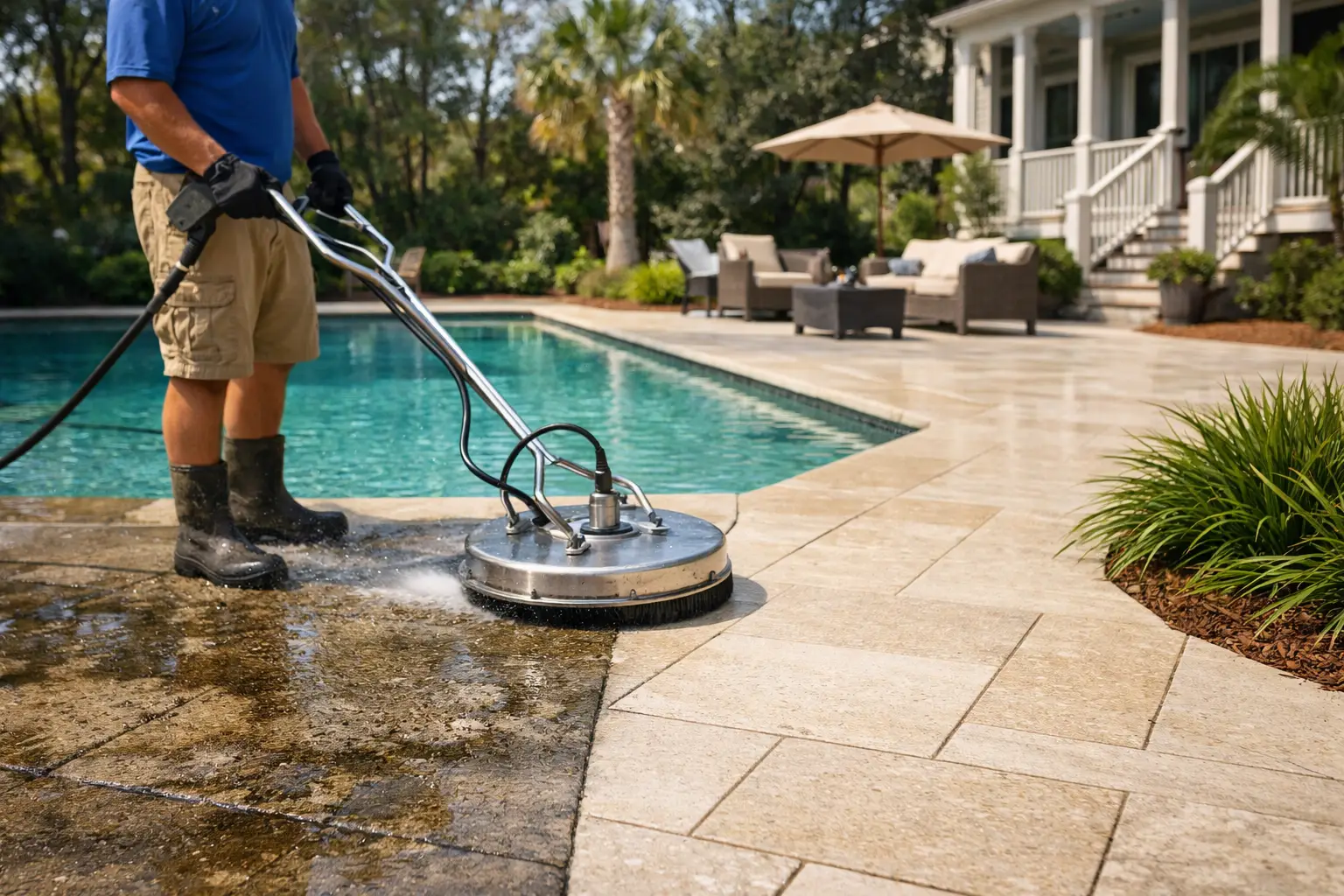
A pool deck can look fine on Saturday morning and become slippery, stained, and uninviting after one humid Lowcountry week. Around Summerville, shade, rain, pollen, oak leaves, sunscreen, and frequent foot traffic create the perfect conditions for buildup. Clean pool decks are not just about making the backyard look better for guests. They help protect bare feet, support safer walks around the water, and help your concrete, pavers, or stone hold up over time.
For families in Nexton, Cane Bay, Goose Creek, and across the Charleston area, the right approach is not always the strongest cleaner or the highest pressure setting. Pool deck cleaning needs to remove grime without damaging the surface, harming surrounding landscaping, or leaving behind harsh residues where children and pets play.
Why Pool Decks Get Dirty So Quickly in the Lowcountry
The same warm, damp weather that makes a South Carolina pool so enjoyable also encourages organic growth. Algae, mildew, and mold can take hold in shaded corners, near planters, along drainage paths, and anywhere water tends to sit. On a textured concrete deck, that growth can be difficult to see at first. You may only notice it when the surface feels slick underfoot.
Pollen is another major culprit. In spring, a yellow film can settle on every outdoor surface, then combine with rainwater and airborne dirt. Add sunscreen overspray, barbecue grease, pet traffic, and leaf stains, and a deck can start to look older than it really is.
A dirty deck is not automatically a sign that a homeowner has neglected it. In the Lowcountry, exterior surfaces simply need regular care. The goal is to address buildup early, before it becomes deeply embedded or turns into a slip hazard.
What a Clean Pool Deck Should Actually Accomplish
A good cleaning does more than brighten the surface. It should remove visible dirt and organic growth, improve traction, reduce stains, and leave the area ready for normal family use. It should also respect the material beneath the dirt.
Concrete can tolerate a different process than travertine, natural stone, brick pavers, coated decks, or stamped concrete. High pressure may be appropriate for certain durable surfaces when handled correctly, but it can scar concrete, remove joint sand from pavers, etch softer stone, or strip a failing coating. That is why the method matters as much as the equipment.
For many homeowners, the best result is an even, clean finish rather than a spotty deck with obvious pressure-wand marks. Professional equipment and experience help create that consistency, especially on large patios, pool surrounds, and textured surfaces where dirt settles below the surface.
How to Clean Pool Decks Safely Between Professional Visits
Routine upkeep makes a noticeable difference and can extend the time between deep cleanings. The safest plan is simple: keep debris from sitting on the deck, rinse away fresh pollen and dirt, and deal with spills quickly before they set.
Start by sweeping leaves, pine needles, mulch, and loose debris off the deck. Organic material holds moisture against the surface and can stain pavers or concrete over time. A light rinse with a garden hose is often enough to remove fresh dust and pollen, especially after a dry stretch.
For sunscreen, food spills, or isolated dirty areas, use a mild cleaner suited to your deck material and follow the label directions. Avoid mixing chemicals, and do not assume that a stronger product will deliver a better result. Harsh cleaners can discolor surfaces, damage nearby grass and plants, and create runoff concerns near the pool.
Keep cleaning solutions and dirty rinse water out of the pool whenever possible. Covering nearby furniture, moving toys, and rinsing surrounding plants before and after cleaning are practical precautions. If you are working near pool equipment, outlets, or a slippery edge, it is smart to leave the job to a trained exterior cleaning professional.
A quick weekly deck check
A five-minute inspection can prevent a bigger cleaning problem. Look for these signs:
- Green or black discoloration in shaded areas
- A slick feel near steps, drains, or planters
- Rust marks from furniture legs or pool accessories
- White mineral deposits near water features
- Dark stains beneath trees or around outdoor kitchens
When these issues are caught early, they are usually easier to treat and less likely to affect the whole deck.
Pressure Washing vs. Soft Washing Around a Pool
Homeowners often use “pressure washing” as a catch-all term, but there is no single setting or cleaning process that fits every pool deck. The right choice depends on the deck material, the type of buildup, the age and condition of the surface, and whether there are sealed areas, loose joints, or existing cracks.
Pressure washing uses water force to lift away dirt and surface buildup. It can be effective on durable concrete when performed with the proper tools, controlled pressure, and technique. The risk comes from using too much force, holding a wand too close, or working unevenly. Those mistakes can leave stripes, expose aggregate, and turn a cleaning project into a repair project.
Soft washing uses lower pressure paired with appropriate cleaning solutions to address organic growth. It is often a better fit for delicate surfaces and areas where aggressive pressure could cause damage. It can also be useful around landscaping, fences, and exterior features adjoining the pool area.
The trade-off is straightforward: aggressive pressure may appear faster, but it is not always safer or more effective. A thoughtful cleaning process takes the surface condition seriously. If your deck has pavers, natural stone, decorative coating, or visible wear, ask for an assessment before any washing begins.
Stains That Need More Than a Rinse
Some stains are not ordinary dirt, and treating them like ordinary dirt can make them worse. Rust stains from metal furniture, fertilizer, or pool equipment need a targeted approach. Leaf tannins can leave brown shadows on concrete and pavers. Mineral deposits may show up as chalky white buildup near water features or saltwater pools.
Oil and grease from grilling areas can soak into porous concrete, while sunscreen and body oils often create dingy traffic paths between the house and the pool. Each of these problems responds differently. The best cleaning method depends on what caused the stain and whether the deck has been sealed.
This is where DIY trial and error can become expensive. Acidic products, bleach-heavy mixtures, and abrasive tools can create permanent color changes or surface damage. If a stain has survived normal rinsing and mild cleaning, professional treatment is usually the safer next step.
When It Is Time to Schedule Pool Deck Cleaning
Most Lowcountry pool decks benefit from a professional cleaning at least once a year. Homes with heavy shade, large trees, frequent pool use, pets, or an outdoor entertaining area may need service more often. After pollen season and before summer gatherings are common times to schedule, but the condition of the deck matters more than the calendar.
Consider professional pool deck cleaning when the surface remains slippery after drying, algae has spread across multiple areas, stains have become stubborn, or your deck looks uneven after DIY efforts. It is also a good time to assess adjoining patios, driveways, walkways, fences, and exterior walls. Cleaning related surfaces together can give the whole property a more cared-for appearance.
Carolina Green Steam provides professional exterior cleaning for homeowners throughout Summerville and surrounding communities, using a surface-appropriate approach designed to deliver visible results without unnecessary harshness. Our team understands that a pool area is part of your family’s living space, not just another slab of concrete.
Protect the Results After Cleaning
Once the deck is clean, small habits help preserve the finish. Keep furniture feet clean, trim plants that create constant shade and moisture, and sweep before storms when possible. If the deck drains poorly, address standing water rather than repeatedly treating the same algae-prone spot.
Sealing may be worth considering for certain concrete, paver, and stone surfaces, but it depends on the material and its current condition. A sealant can help resist stains and moisture, yet the wrong product can alter appearance or create a slick finish. Get surface-specific advice before applying one.
Your backyard should feel ready when friends stop by, when kids head outside, and when you want a quiet evening by the water. A clean, safe pool deck makes that easier – and regular care keeps a small exterior task from becoming a much bigger one.