A driveway can look dramatically better after cleaning, but homeowners are right to ask, can pressure washing damage concrete? Yes, it can when the wrong pressure, nozzle, technique, or cleaning solution is used. The goal is not simply to blast away Lowcountry algae and driveway stains. It is to remove buildup while protecting the concrete underneath.
Concrete is durable, but it is not indestructible. In Summerville, Nexton, Cane Bay, Goose Creek, and surrounding communities, humidity, rain, pollen, mildew, and vehicle drips can make driveways and patios look older than they are. A careful professional cleaning restores curb appeal without leaving behind stripes, pits, or a roughened surface.
Can Pressure Washing Damage Concrete? It Can.
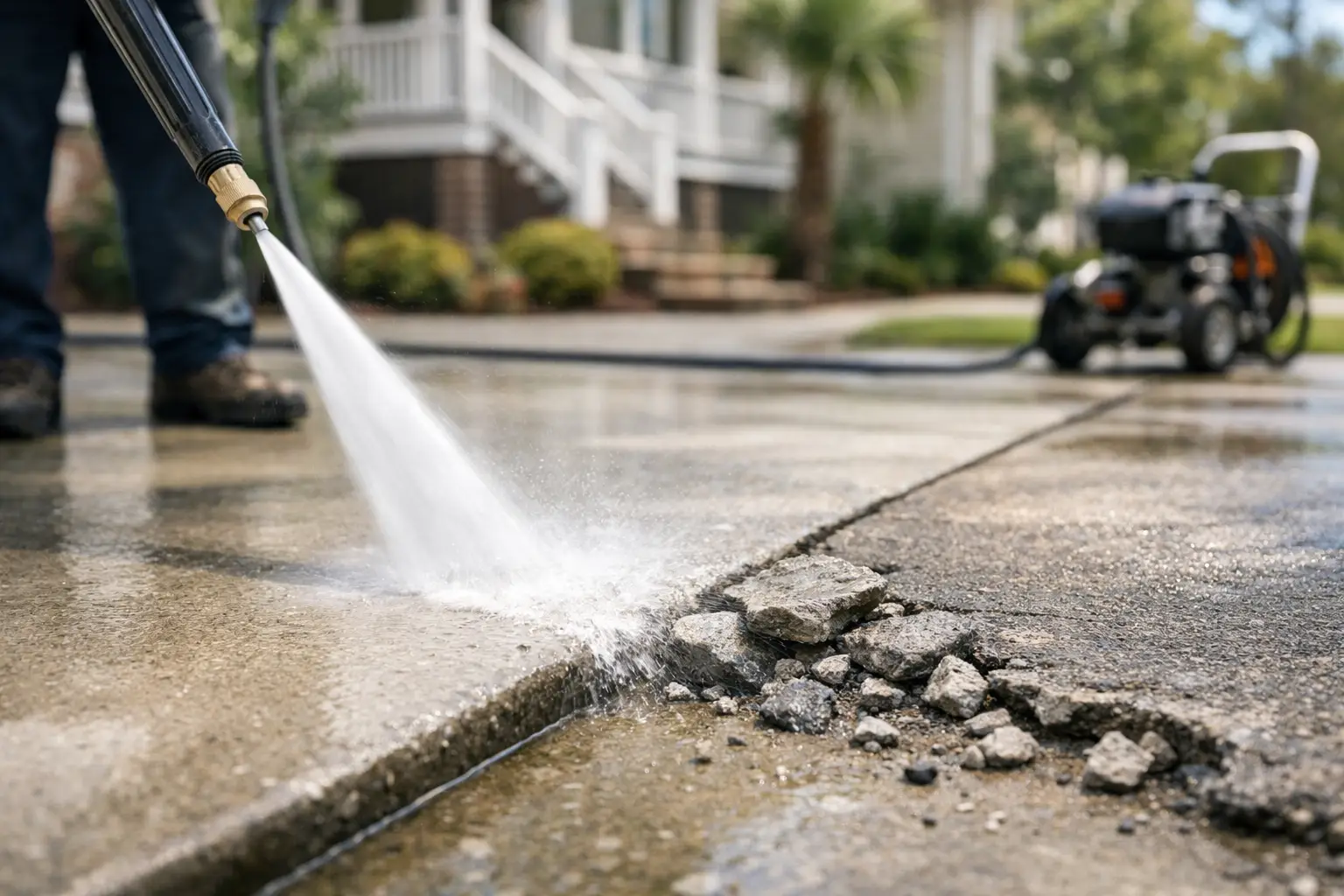
Pressure washing can damage concrete by stripping away part of its top layer, called the cream or paste. This is the smoother, denser surface created when concrete is finished and cured. Once it is disturbed, the concrete may feel rough, show lighter patches, collect dirt faster, or become more vulnerable to moisture and wear.
Damage does not always happen in one obvious pass. A homeowner may clean a patio and feel pleased with the immediate results, only to notice pale lines, gritty areas, or a patchy finish once the surface dries. Those marks are often caused by concentrated pressure held too close to the concrete.
The risk is higher on older concrete, poorly installed slabs, areas with existing cracks, and concrete that has already begun to flake or crumble. A newer driveway can also be damaged if it has not had enough time to cure. Fresh concrete should generally cure for at least 28 days before pressure washing, and longer may be wise if there are concerns about the finish or weather conditions.
Why Concrete Gets Damaged During Cleaning
Pressure is only one part of the equation. A machine with a high PSI rating may be appropriate for a tough surface in skilled hands, but too much pressure in the wrong spot can leave permanent damage. The nozzle tip, distance from the surface, water flow, cleaning chemistry, and amount of time spent in one area all matter.
A narrow zero-degree nozzle is especially risky. It creates a concentrated stream that can cut into concrete much like a sharp tool. It may remove a small dark spot quickly, but it can also carve lines into the surface. For most residential concrete, a wider fan tip or a properly operated surface cleaner delivers a more even result.
Holding the wand too close is another common problem. Even moderate pressure becomes aggressive when the nozzle is inches from the slab. Moving too slowly can create visible wand marks, while moving too fast may leave behind algae and soil that tempt someone to repeat the process with even more pressure.
Cleaning products can create problems too. Strong or improperly mixed chemicals may discolor concrete, harm nearby landscaping, or leave residues if they are not thoroughly rinsed. The best approach uses only the cleaning method needed for the stain, with thoughtful protection for surrounding grass, plants, pets, and outdoor living areas.
Warning Signs Your Concrete Needs a Gentle Approach
Not every driveway or patio should be cleaned the same way. Before washing, look closely at the condition of the concrete. If you see crumbling edges, loose aggregate, scaling, deep cracks, old paint, or previous etching, the surface needs extra care.
Pay attention to areas around the garage entrance, pool deck, steps, and expansion joints. These spots often receive more traffic, collect more moisture, or have existing wear. Pool decks also deserve special caution because an overly aggressive cleaning can change the texture of the surface and make it uncomfortable underfoot.
In the Charleston area, shaded sections of a driveway often develop heavy algae growth. That green or black buildup can make concrete slippery, but it does not automatically require maximum pressure. In many cases, allowing an appropriate cleaner to do its job before rinsing reduces the need for harsh force.
How to Pressure Wash Concrete Without Damage
Safe concrete cleaning starts with assessment, not with pulling the trigger. Identify whether you are dealing with organic growth, mud, rust, oil, tire marks, or old staining. Each issue responds differently, and trying to solve every stain with more pressure is where avoidable damage begins.
For normal driveway and patio maintenance, begin with the lowest effective pressure. Use a broad spray pattern, keep a consistent distance from the surface, and maintain steady overlapping passes. A surface cleaner is often the best choice for large, flat concrete areas because it helps prevent the tiger-striping that can happen with a wand.
A sound process typically includes these steps:
- Clear furniture, planters, vehicles, and loose debris from the area.
- Pre-treat algae, mildew, or other stains with a surface-appropriate cleaner.
- Rinse using controlled, even passes rather than concentrating on one small spot.
- Inspect the concrete after it dries, when uneven cleaning or surface damage is easier to see.
Oil stains and rust marks may need specialized treatment. Pressure alone often cannot fully remove them, and repeated aggressive washing can make the surrounding concrete look worse than the stain itself. For these problems, a targeted product and a patient method are usually safer than a stronger blast of water.
When DIY Pressure Washing Makes Sense
A homeowner can often handle light maintenance on newer, sound concrete with the right equipment and a conservative approach. A small patio with mild pollen or surface dirt is very different from a large, stained driveway with years of algae buildup.
DIY cleaning becomes less appealing when the concrete has visible deterioration, stubborn stains, decorative finishes, sealed areas, or tight spaces near siding, screens, windows, and landscaping. It also takes time to learn how fast to move, how far to hold the nozzle, and how to keep the finish even from one pass to the next.
There is a real trade-off: renting or buying equipment may seem economical, but one etched patch can be far more frustrating and expensive than professional cleaning. Concrete repairs rarely blend perfectly with the original slab, especially on highly visible driveways and front walkways.
Professional Concrete Cleaning Protects Your Investment
A professional service does more than arrive with a stronger machine. The value is in knowing when to use pressure, when to use a gentler soft-wash approach, and when to treat a stain before rinsing. The right equipment and technique help remove buildup evenly while preserving the surface.
For homeowners in Summerville and throughout Dorchester, Berkeley, and Charleston County, Carolina Green Steam provides exterior cleaning with the same careful, family-focused service customers expect inside their homes. A professional assessment can help determine whether your concrete needs routine cleaning, stain treatment, or a more cautious approach because of age and existing wear.
The right cleaning also improves safety. Algae and mildew on a shaded walkway, patio, or pool deck can become slippery after rain. Removing that buildup protects the appearance of your home while making outdoor spaces more comfortable for children, pets, guests, and everyday use.
A Clean Driveway Should Not Come With New Damage
Pressure washing is effective, but concrete cleaning is not a one-setting job. The best results come from matching the method to the condition of the slab, using enough cleaning power to remove buildup without sacrificing the finish that protects it.
If your driveway, patio, or pool deck is looking dark, streaked, or slippery, treat it early instead of waiting until stains become deeply set. A careful cleaning plan can bring back the clean, welcoming look of your outdoor spaces while helping your concrete hold up to many more South Carolina seasons.