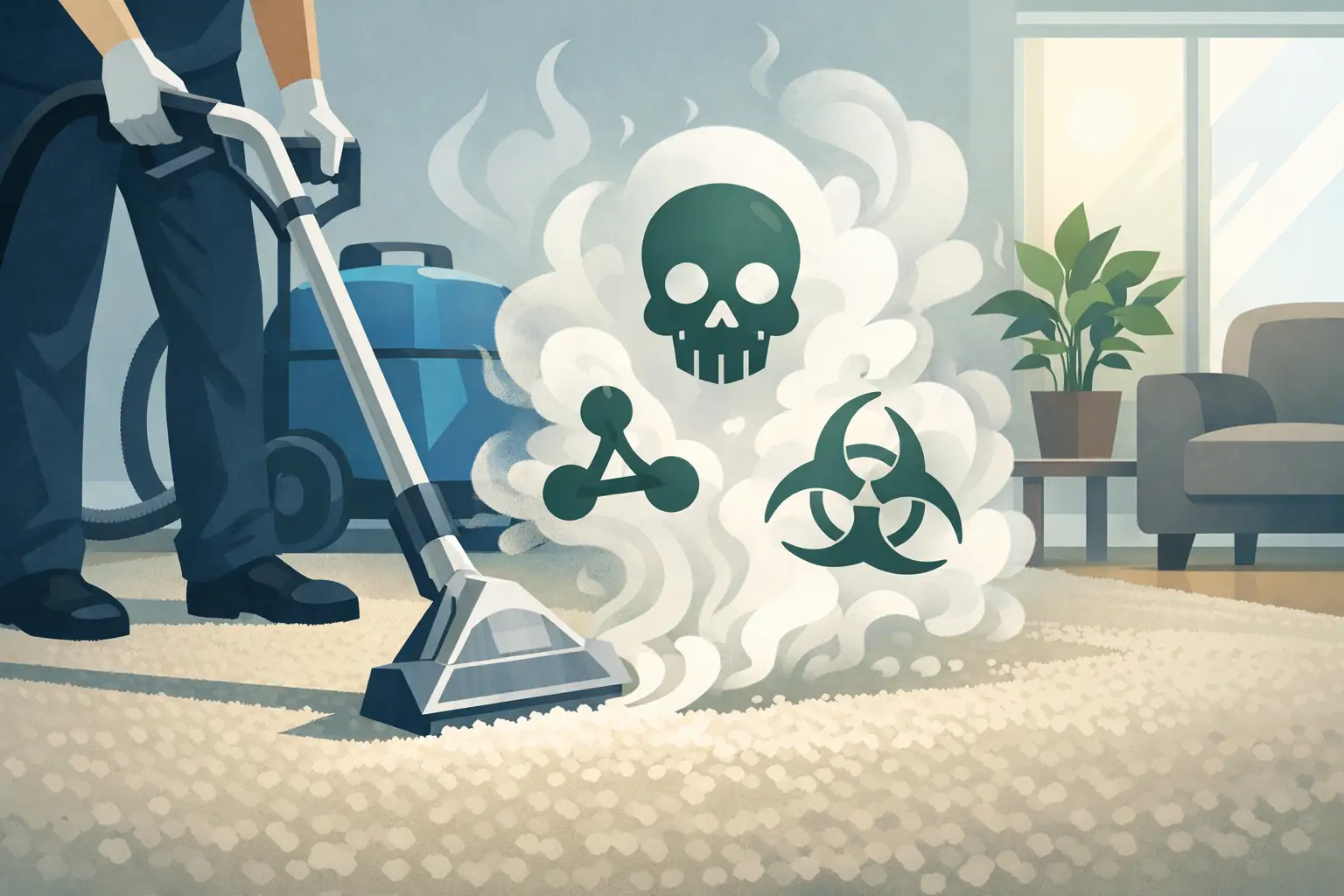
That sharp smell after a carpet cleaning appointment can make anyone stop and wonder: are carpet cleaning fumes toxic? The honest answer is that it depends on what was used, how the cleaning was done, and who is breathing the air afterward. Some carpet cleaning products release fumes that can irritate your eyes, throat, or lungs. Others are much milder and far less likely to cause problems, especially when paired with proper ventilation and professional equipment.
For families with young kids, pets, asthma, allergies, or chemical sensitivities, this question matters even more. You should not have to choose between clean carpets and peace of mind. A professional cleaning should leave your home fresher, not make you worry about what is lingering in the air.
Are carpet cleaning fumes toxic or just unpleasant?
Not every strong odor is automatically toxic, but a strong odor is still a warning sign that something is in the air. In many cases, what people call carpet cleaning fumes come from volatile organic compounds, also known as VOCs, along with added fragrances, solvents, deodorizers, or stain treatments. Those ingredients can evaporate into the air during and after cleaning.
For a healthy adult, mild exposure may only cause short-term irritation like a headache, watery eyes, coughing, or a scratchy throat. For someone with asthma, respiratory issues, migraines, or chemical sensitivities, the same exposure can feel much worse. Babies, toddlers, older adults, and pets may also be more vulnerable because they spend time closer to the carpet and indoor air.
So the better question is not only whether carpet cleaning fumes are toxic, but how much exposure your household is getting and whether that exposure is avoidable. In many homes, it is.
What actually causes the fumes?
A lot of homeowners assume the steam itself creates the smell. Usually, that is not the case. The bigger issue is the cleaning solution. Traditional carpet cleaning methods sometimes rely on stronger detergents, spot removers, heavy deodorizing products, or low-cost shampoos that leave residue behind. As those products dry, they can continue releasing odors into the room.
Improper cleaning can make things worse. If too much product is used, or if the carpet is left overly wet, the smell can hang around longer than it should. In extreme cases, excess moisture can contribute to mildew odors, which creates an entirely different indoor air problem.
This is why equipment matters just as much as the product itself. Professional truck-mounted steam cleaning systems generally extract more moisture and more residue than weaker DIY machines or low-powered portable units. Better extraction means less leftover chemical content sitting in the carpet fibers.
Who should be most cautious?
If everyone in the house is healthy and the cleaning products are mild, the risk may be low. But some households should be far more selective about the company and process they choose.
Parents of babies and young children should be cautious because kids crawl, play, and nap close to the carpet. Pet owners should think the same way. Dogs and cats are in direct contact with floors and are more likely to inhale lingering vapors at close range. Homeowners with asthma, COPD, allergies, or fragrance sensitivity should also ask detailed questions before booking.
If someone in your home has ever felt sick after paint, air fresheners, candles, or household cleaners, that is a sign to be extra careful with carpet cleaning products too. No excuses. Your cleaning company should be able to explain exactly what they use and why it is safe.
Signs the cleaning products may be too harsh
A mild clean smell that fades quickly is one thing. A heavy chemical odor that lingers for hours or days is another. If you notice burning eyes, dizziness, nausea, coughing, or a strong perfume-like scent after service, the products may be too aggressive for your home.
Another red flag is sticky or crunchy carpet after it dries. That often means excess detergent was left behind. Residue does not just affect how the carpet feels. It can trap dirt faster, attract new soil, and continue releasing odor longer than a properly rinsed and extracted carpet would.
A trustworthy company will not brush off these concerns. They should be upfront about ingredients, realistic about dry times, and willing to recommend lower-odor options for sensitive households.
Safer carpet cleaning starts with the method
If you want to reduce risk, the safest approach is not avoiding carpet cleaning altogether. Dirty carpets hold dust, allergens, dander, tracked-in grime, and odor-causing material that can affect indoor comfort too. The goal is to clean effectively without loading your home with unnecessary chemicals.
That usually means choosing a service that uses non-toxic, green-certified products and professional hot water extraction with strong suction. When the solution is safer and the extraction is stronger, there is simply less left behind in the carpet and less released into the air.
This is one reason many homeowners in the Charleston area look for family-and-pet-safe service instead of old-school chemical-heavy cleaning. Carolina Green Steam, for example, built its approach around non-toxic cleaning and truck-mounted steam equipment because homeowners should not have to guess whether their freshly cleaned carpets are safe for the people and pets they love most.
How to protect your home after carpet cleaning
Even with safer products, a few simple steps make a big difference. Open windows if weather allows. Turn on ceiling fans or your HVAC fan to keep air moving. Keep kids and pets off the carpet until it is mostly dry. If anyone in your home is highly sensitive, consider having them spend time in another area of the house during and right after the cleaning.
It also helps to ask about added treatments before the job starts. Deodorizers, protectors, and spot treatments can be useful, but not every home needs every add-on. If safety and low odor are your top priorities, say so clearly. A good company will tailor the service instead of pushing a one-size-fits-all package.
Dry time matters too. The longer the carpet stays damp, the longer any odor may linger. Faster drying is not just more convenient. It is part of a healthier result.
Are DIY carpet cleaners more risky?
Sometimes, yes. Rental machines and store-bought carpet shampoos can seem like the budget-friendly option, but they often leave behind more water and more detergent than homeowners realize. Many DIY products are heavily fragranced, and many rental units do not have enough suction power to fully rinse and extract what was applied.
That can lead to stronger odors, longer dry times, and more residue in the carpet. It can also make people think carpet cleaning itself is the problem, when the real issue is the product choice and weak extraction.
Professional cleaning is not automatically safer across the board, but a company that uses low-toxicity solutions and commercial-grade extraction usually gives you much better control over fumes, residue, and drying.
What to ask before you book
If you are concerned about carpet cleaning fumes, ask direct questions. Are the products non-toxic? Are they safe for children and pets? Are they heavily fragranced? Do they leave residue behind? Is the cleaning done with truck-mounted hot water extraction or a lower-powered method? How long will the carpets take to dry?
A dependable company will answer clearly, without dodging the issue or relying on vague claims. You deserve straight answers because this is your home, your air, and your family.
The bottom line is simple. Carpet cleaning fumes can be irritating and, in some situations, unhealthy, especially when harsh chemicals, poor ventilation, and sensitive household members are part of the equation. But carpet cleaning does not have to come with that trade-off. When the products are safer, the equipment is stronger, and the company stands behind its process, you can get the clean you want without bringing unnecessary chemical exposure into your home.
A clean carpet should feel like relief, not a risk. If a company cannot explain how they protect your indoor air, keep looking until you find one that can.