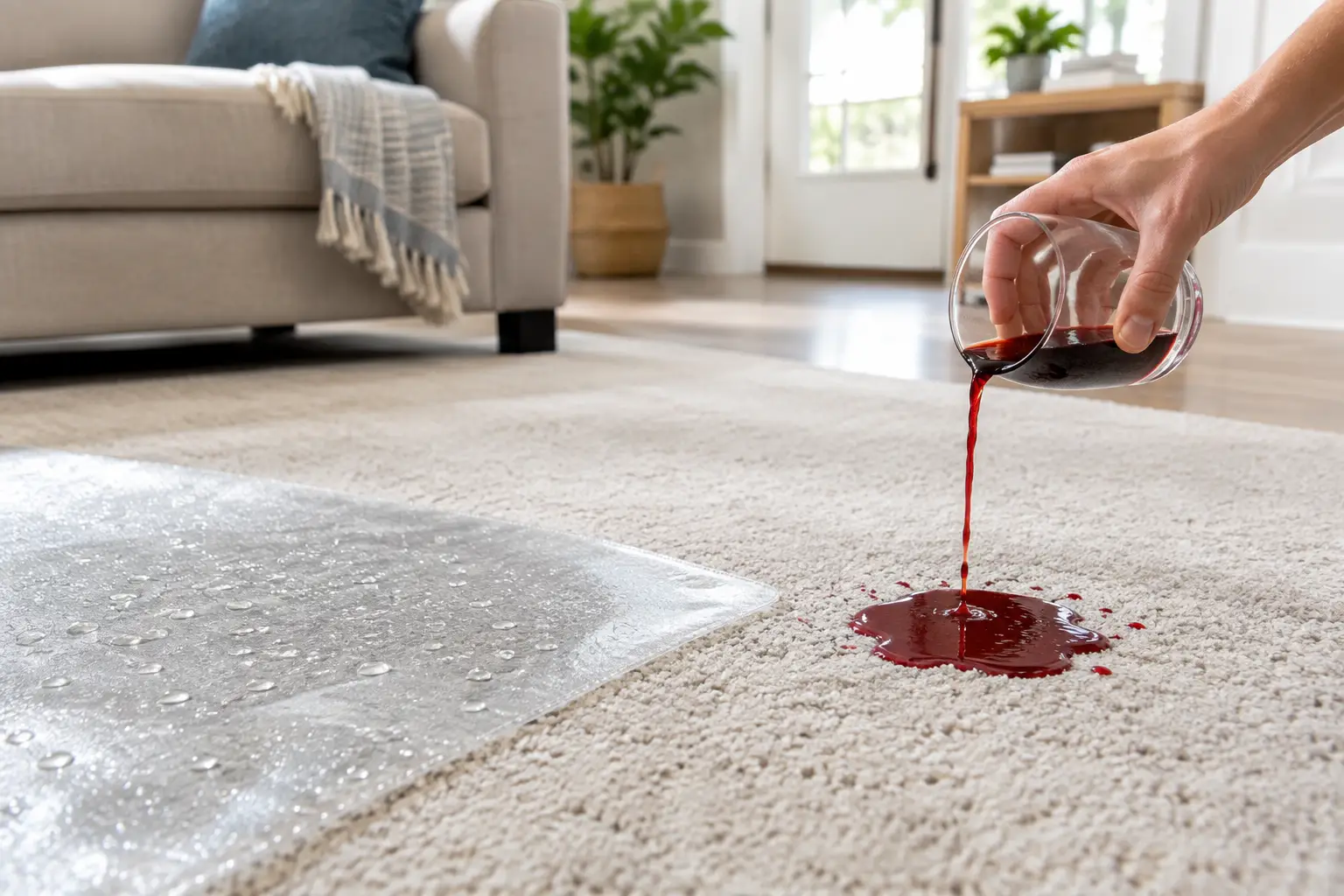
A dropped glass of sweet tea, a pet accident, or a child’s snack can turn into a stubborn carpet stain faster than most homeowners expect. So, does carpet protector prevent spills? Not completely. A quality protector helps keep liquid from soaking into carpet fibers right away, giving you valuable time to blot the spill before it becomes a permanent problem.
For busy families in Summerville, Nexton, Cane Bay, and throughout the Lowcountry, that extra time can make a real difference. Carpet protector is not a force field, but it is one of the most practical ways to help clean carpets stay cleaner longer.
What Carpet Protector Actually Does
Professional carpet protector creates a barrier around individual carpet fibers. Instead of immediately absorbing a spill, protected fibers are more likely to resist liquid long enough for you to remove it properly. Many spills will bead on the surface or spread more slowly, rather than quickly sinking down toward the carpet backing and padding.
That matters because the faster a spill penetrates, the harder it is to remove. Dark drinks, greasy foods, makeup, pet messes, and sauces can bond with unprotected fibers. Once a stain reaches the backing or pad, it may also create odor concerns that a surface cleaning cannot fully solve.
Protector also helps with dry soil. Dirt and grit tracked in from a Summerville yard, a Goose Creek soccer field, or a rainy Charleston afternoon do not stick as aggressively to protected fibers. Regular vacuuming becomes more effective, and professional cleaning can produce better long-term results because soil releases more easily.
Does Carpet Protector Prevent Spills From Staining?
Carpet protector can prevent many spills from becoming stains when the spill is handled quickly. That distinction is important. The protector does not make carpet spill-proof, and it does not mean a homeowner can leave red wine, coffee, or pet urine sitting for hours without consequences.
Think of protector as a time buffer. It slows absorption so you can act before the spill works its way into the fibers. The best results happen when you blot promptly with a clean, white towel, working from the outside of the spill toward the center. Avoid rubbing, which can push the spill deeper and distort the carpet fibers.
A few factors determine how well protection performs:
- The type of spill matters. Water-based liquids are generally easier to manage than oils, grease, dyes, or acidic pet accidents.
- The carpet material matters. Some synthetic carpets naturally resist stains better than wool or other natural fibers, but all carpets can benefit from professional protection when appropriate.
- The age of the protector matters. Foot traffic, vacuuming, cleaning, and everyday wear gradually reduce its effectiveness.
- Fast cleanup matters most. Even a protected carpet can stain if a spill is ignored.
The honest answer is that protector reduces risk. It does not eliminate it. For homes with kids, pets, frequent guests, or light-colored carpet, reducing that risk is often well worth it.
Why Lowcountry Homes Benefit From Carpet Protection
The Charleston-area climate puts extra pressure on carpets. Humidity, sand, pollen, and wet shoes can bring moisture and soil indoors all year. In neighborhoods from Ladson and North Charleston to Moncks Corner and Hanahan, homeowners often notice that high-traffic areas become dull or matted well before the rest of the carpet.
Carpet protector helps limit how firmly that everyday soil attaches to the fibers. It can make a noticeable difference in entryways, hallways, stairs, living rooms, and the spots where pets like to rest. It is especially helpful after a professional steam cleaning, when the carpet is already free of embedded soil and ready for protection.
For rental owners and property managers, protection can also help preserve the appearance of carpet between tenants or guests. It will not replace routine maintenance or address neglected stains, but it can help reduce the wear that makes a room look older than it is.
When Protector Will Not Be Enough
There are situations where a protector treatment cannot solve the underlying issue. Pet urine is the clearest example. Protector may slow the initial absorption of liquid, but urine can still travel through carpet, backing, and padding if the accident is large or left untreated. The odor-causing residue must be treated at the source, not simply covered with a deodorizer.
Likewise, old stains may not disappear because protector is applied afterward. A protector treatment is designed to help prevent future staining. It does not erase years of drink spills, grease, or traffic patterns that have already set into the carpet.
Heavy residue from store-bought spot cleaners can also create problems. Some products leave behind a sticky film that attracts more soil, causing a clean spot to turn dark again. If you are unsure what caused a recurring spot, professional cleaning is usually the safer answer than adding more product.
The Best Time to Apply Carpet Protector
The best time to apply carpet protector is immediately after professional carpet cleaning. Applying it to a dirty carpet can trap soil beneath the treatment and reduce the benefit. After truck-mounted steam cleaning removes embedded dirt and residue, the protector can coat clean fibers more evenly.
Most active households should consider reapplying protector after each professional cleaning or about every 12 to 18 months. Homes with multiple pets, toddlers, light carpet, or high traffic may benefit from more frequent service. A quiet guest room with little use may not need it as often.
At Carolina Green Steam, we recommend treatments based on how your home is actually used, not a one-size-fits-all sales pitch. A family room where kids eat snacks and the dog naps deserves a different maintenance plan than a formal room that sees little traffic.
What to Do When a Spill Happens
Even with protection, quick action gives you the best chance of avoiding a stain. Start by removing any solid material with a spoon or dull edge. Then blot the area with a clean white towel. Press down firmly, lift, and repeat until the towel is no longer picking up moisture.
Use a small amount of plain water only if needed, then blot again to remove the moisture. Do not soak the carpet, and do not scrub in circles. Scrubbing spreads the spill, damages the pile, and can force staining material deeper into the carpet.
For oily spills, dark dyes, large pet accidents, or anything that keeps returning after it dries, call a professional promptly. The sooner the source is addressed, the better the chance of protecting both the appearance of your carpet and the air quality in your home.
Is Carpet Protector Worth It?
For many homeowners, yes. Carpet protector is most valuable when it is viewed as preventive maintenance rather than a promise that nothing will ever stain. It can make cleanup easier, reduce the impact of everyday traffic, and help carpet hold its color and texture longer.
It may be less necessary in rooms that rarely see people, pets, food, or drinks. But in the rooms where life happens, protection can help avoid the frustration of seeing a fresh cleaning undone by one small accident.
A cleaner, protected carpet gives your family more breathing room when real life gets messy. If your carpets are due for professional cleaning in Summerville or the surrounding Charleston area, ask about a family- and pet-conscious protection option that fits the way your home is lived in.