A dog can have one accident near the edge of a living room rug, and weeks later the whole room can smell off when the South Carolina humidity rises. That is the frustrating part of pet odor: the visible spot may be gone, but the odor source can still be working below the surface. This pet odor removal example shows why treating only what you can see rarely delivers a lasting result.
A real-world pet odor removal example
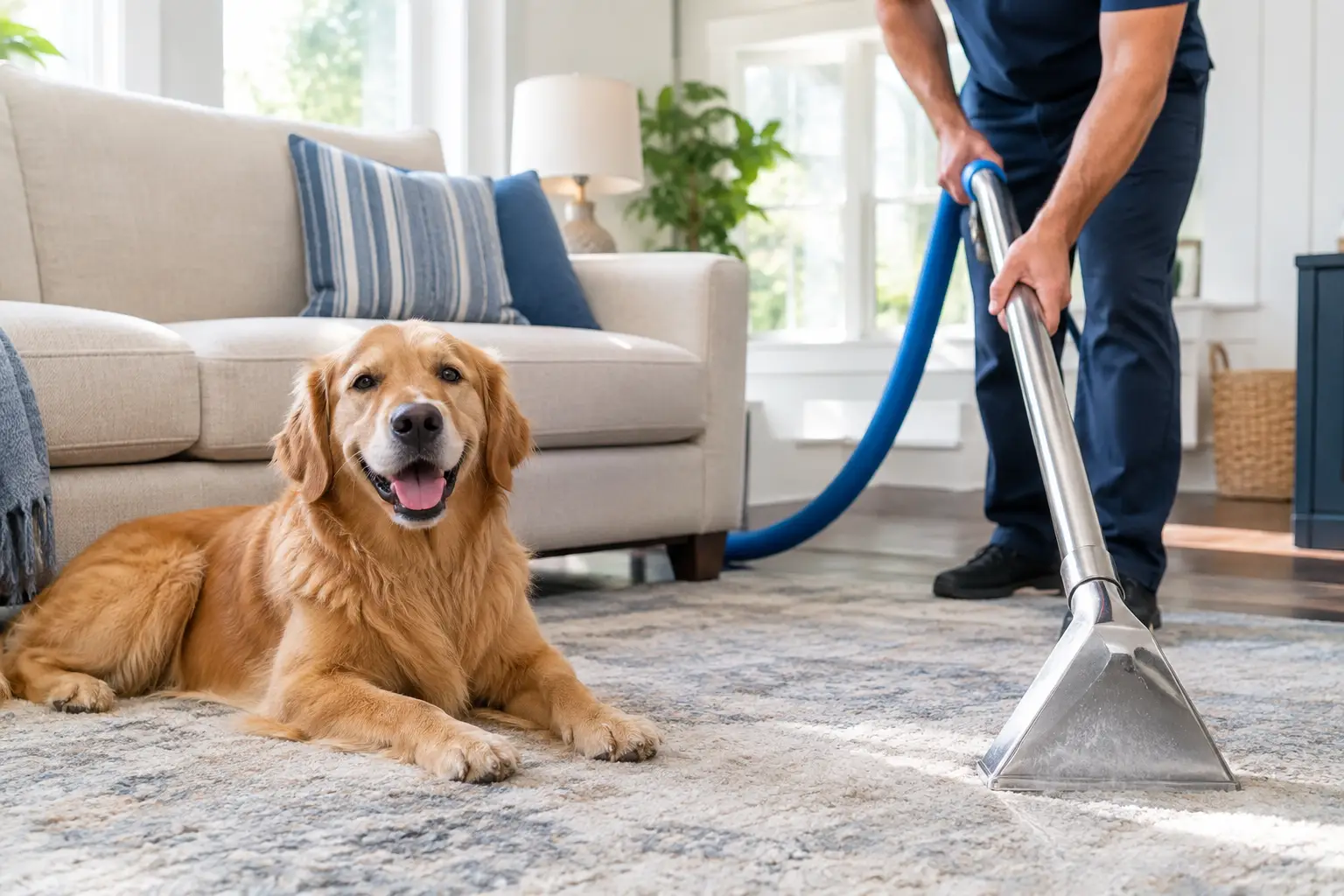
Picture a family in Summerville with a senior dog and a light-colored carpet in the family room. The dog had begun having occasional accidents near the sectional. The family responded quickly each time with a store-bought spray and paper towels. The carpet looked clean, but a sour urine smell returned after rainy days, when guests sat on the floor, or whenever the air conditioning had been running for a while.
The issue was not poor housekeeping. The urine had traveled past the carpet fibers, through the backing, and into the padding below. In some spots, it had also reached the subfloor. Surface sprays could improve the smell temporarily, but they could not fully reach or neutralize the contamination underneath.
A professional assessment starts by locating the affected areas, including older spots that may no longer be visible. Pet urine can dry clear, especially on patterned carpet or rugs, so odor location is not always obvious to the homeowner. Once the source areas are identified, the treatment needs to match the depth and severity of the problem.
In this example, the best approach was targeted pet odor treatment at the source, followed by professional truck-mounted steam cleaning. The treatment was designed to break down odor-causing residues rather than cover them with fragrance. Cleaning then removed the loosened soil and residue from the carpet. Because the odor had reached the padding in a few places, those areas needed more attention than a standard carpet cleaning appointment.
The result was not simply a better-smelling room on the day of service. The goal was a home that stayed fresher after the carpet dried and through normal Lowcountry humidity. That distinction matters.
Why pet odors come back after DIY cleaning
Many household cleaners are useful for a fresh accident when used promptly and correctly. Blotting up moisture, avoiding harsh scrubbing, and treating the area right away can reduce staining and limit how deeply urine travels. But once an odor has lingered for days, weeks, or months, DIY cleaning has limits.
Pet urine contains compounds that can leave behind crystals and residue as it dries. Moisture in the air can reactivate those residues, which is why a room may smell fine one day and noticeably worse the next. In Summerville, Goose Creek, Ladson, and other humid Charleston-area communities, that pattern is especially familiar.
A scented spray may mask the problem for a short time. Shampooing can make the top of the carpet look cleaner while leaving the deeper source untouched. Over-wetting a spot can also spread contamination farther into the backing or padding. None of that means homeowners have failed. It means the treatment has to reach as far as the odor has traveled.
What a professional treatment should address
Pet odor removal is not a one-size-fits-all service. A recent accident in one small spot is different from repeated marking near a doorway, a puppy-training phase, or an odor that has built up beneath furniture over several years. The material matters too. Carpet, area rugs, upholstery, and mattresses each require a different approach.
For carpeted areas, a professional should evaluate the fibers, backing, padding, and likely depth of contamination. If urine is limited to the carpet face fibers, targeted treatment and deep cleaning may resolve the issue. If it has penetrated the pad or reached the subfloor, more intensive remediation may be necessary. Severe or long-term contamination can sometimes require pad replacement or subfloor sealing. Honest recommendations matter more than promising that every odor can be erased with a quick surface clean.
Upholstery deserves similar care. A pet may favor one end of the sofa, a chair cushion, or a fabric ottoman. Treating those pieces requires controlled moisture and products appropriate for the fabric, so the odor is addressed without damaging the material or leaving it overly wet.
At Carolina Green Steam, the focus is on non-toxic, green-certified cleaning solutions paired with professional equipment. For families with children and pets, that means pursuing a cleaner, healthier home without bringing harsh chemical-heavy products into the rooms everyone uses most.
The difference between odor treatment and deodorizer
A deodorizer is intended to improve the smell in a space. It can be helpful as a finishing touch, but it is not the same as odor remediation. True pet odor treatment is directed at the source material causing the smell.
That is why a professional may ask where the accidents happened, how long the odor has been present, whether the pet returns to the same area, and what products have already been used. Those details help determine whether the problem is likely on the surface or below it. They also prevent a technician from applying a generic solution where a targeted treatment is needed.
When professional help is worth it
A single fresh accident that is blotted immediately may be manageable at home. Repeated odors, old stains, or a smell that returns after cleaning are good reasons to call a professional. The same is true if you are preparing a home for sale, welcoming a new tenant, managing a short-term rental, or trying to protect a newer carpet investment.
Homeowners in Nexton, Cane Bay, Moncks Corner, and North Charleston often call after trying multiple products with no lasting improvement. By then, the concern is usually bigger than one spot. They want to use the room comfortably again, avoid embarrassment when company visits, and know the carpet is genuinely clean rather than heavily perfumed.
Professional cleaning also helps remove the everyday soil, dander, and tracked-in residue that can make carpets hold onto odors. However, deep cleaning alone is not automatically pet odor removal. When urine is involved, the odor source must be specifically evaluated and treated.
How to protect the area after treatment
Once the source has been addressed, a few practical habits can help preserve the result. Give cleaned carpet or upholstery adequate drying time, and keep pets away from the treated area until it is fully dry. If a pet repeatedly returns to the same location, consider whether a routine change, additional outdoor breaks, or veterinary guidance may be needed.
Carpet protector can also be a smart preventive option for homes with pets, children, or busy family rooms. It does not make carpet accident-proof, and it is not a substitute for quick cleanup. It can make future spills and fresh accidents easier to blot before they settle into the fibers.
If an accident happens again, blot from the outside toward the center with clean white towels. Avoid rubbing, which can push moisture deeper and spread the spot. Skip bleach, strong fragrances, and excessive water. Those shortcuts can create a bigger cleaning challenge later.
A home should smell like the people and pets who are loved there, not like yesterday’s accident or a cover-up fragrance. When odor keeps coming back, the answer is not more perfume. It is finding the source, treating it properly, and giving your family a clean, comfortable room to enjoy again.