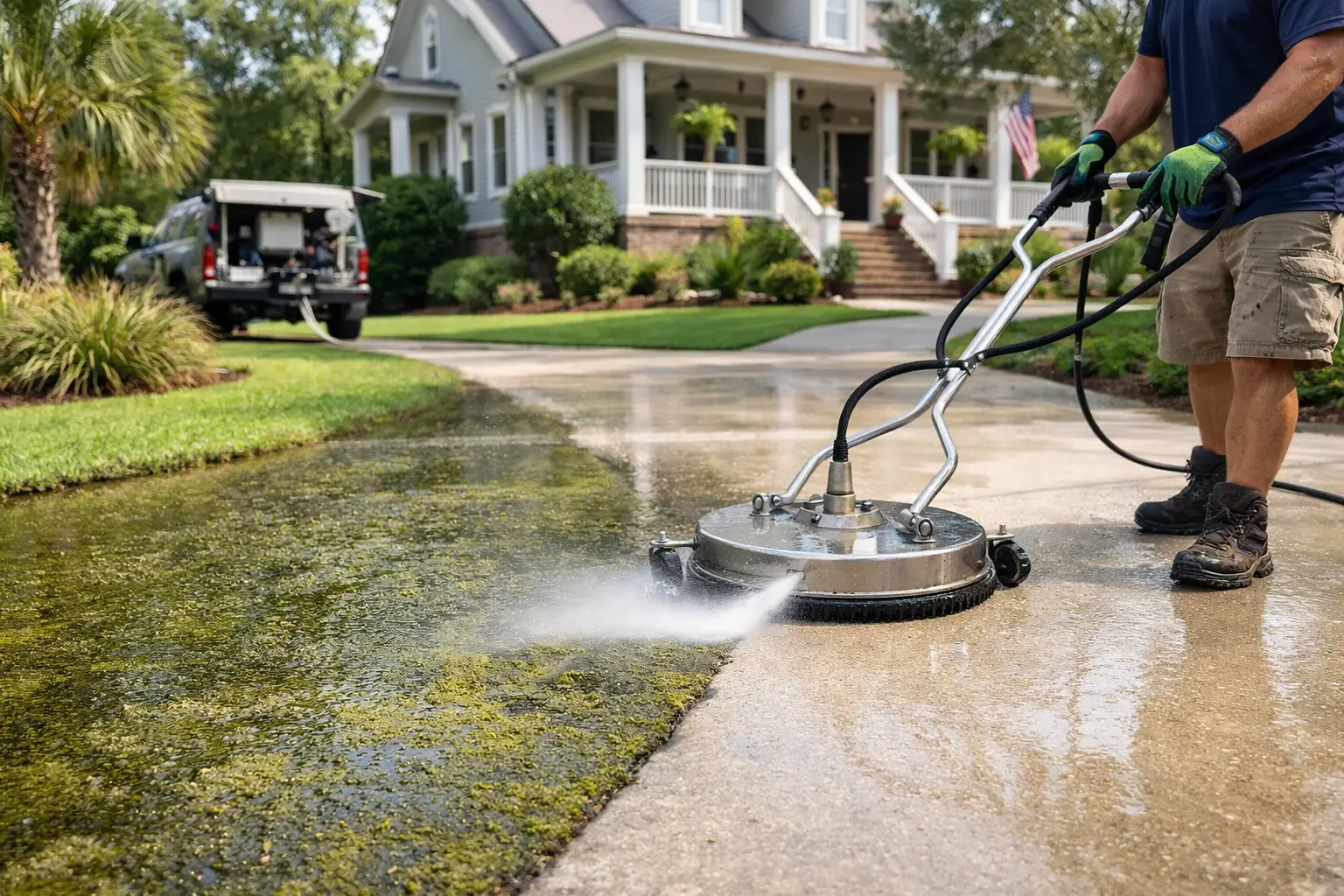
A green film across the driveway can make an otherwise well-kept home look neglected fast. More importantly, it becomes slick when the Lowcountry gets a little rain. Knowing how to treat driveway algae safely helps protect your family, guests, pets, and the concrete itself without turning a weekend cleanup into a bigger problem.
In Summerville, Nexton, Cane Bay, Goose Creek, and nearby communities, algae is not a sign that you are doing something wrong. Our warm temperatures, humidity, tree cover, and frequent rain create ideal growing conditions. The key is removing the existing growth thoroughly, then changing the conditions that allow it to return.
Why algae keeps coming back on Lowcountry driveways
Algae needs moisture, shade, and a surface it can cling to. Concrete may look smooth, but it is porous. Tiny openings in the surface collect water, pollen, soil, leaf residue, and organic debris. That gives algae a place to take hold.
Driveways on the north or east side of a home often stay damp longer, especially beneath oaks, pines, and landscaping. In Charleston-area neighborhoods, summer humidity can keep shaded concrete damp well into the day. Runoff from gutters, sprinklers that hit the pavement, and poor drainage can make one section of a driveway much greener than the rest.
The green, black, or dark gray staining may also be a mix of algae, mildew, mold, and embedded dirt. That distinction matters because rinsing away the visible green color does not always remove the growth rooted in the concrete pores. When the surface is not properly cleaned and treated, the problem usually returns sooner than homeowners expect.
How to treat driveway algae without damaging concrete
For a small, early patch of algae, a careful DIY approach can work. Start on a dry day when rain is not expected for at least several hours. Move vehicles, outdoor furniture, toys, and potted plants away from the work area. Sweep off leaves, loose dirt, and pine straw first so cleaning products can reach the concrete.
Use a cleaner specifically labeled for exterior concrete and algae or mildew removal. Follow the product directions exactly, including dilution, dwell time, and rinsing requirements. Wear closed-toe shoes with grip, gloves, and eye protection. Keep children and pets away until the driveway is completely rinsed and dry.
Apply the cleaner evenly, but do not let it dry on the surface. Agitate stubborn spots with a stiff nylon-bristle brush, then rinse thoroughly. A nylon brush is generally a safer choice than a wire brush, which can leave marks or shed metal fragments onto the concrete.
A pressure washer can help remove the remaining organic buildup, but technique matters. Too much pressure or a narrow, concentrated spray can leave visible wand marks, roughen aging concrete, or damage the surface near cracks and joints. Keep the nozzle moving, maintain a consistent distance, and test a small inconspicuous area before cleaning the entire driveway.
For broad algae coverage, heavily shaded concrete, or years of buildup, professional driveway cleaning is usually the safer and more effective choice. The right equipment, cleaning solution, and water pressure depend on the age and condition of the concrete. A reliable provider will not treat every driveway the same way.
Never mix cleaning chemicals
This is one place where experimenting is not worth the risk. Never combine bleach with ammonia, acids, or other household cleaners. Those mixtures can create dangerous fumes. Do not assume that a stronger concentration will produce a better result, either. It can harm nearby grass and plants, discolor surfaces, damage metal fixtures, and create unnecessary exposure risks.
If you use any exterior cleaner, protect surrounding landscaping with water before and after application, and prevent runoff from entering storm drains whenever possible. For families with pets and children, product handling and full rinsing are just as important as the cleaning itself.
When pressure washing is not enough
Pressure alone can make algae look better for a short time because it removes the surface layer. But if organic growth remains down in the pores, it can reappear after the next stretch of humid weather. That is why professional cleaning often combines the appropriate treatment with controlled washing rather than relying on force alone.
There is also a difference between cleaning sound concrete and cleaning concrete that is already compromised. If your driveway has crumbling edges, exposed aggregate, deep cracks, flaking sealant, or old oil stains, aggressive pressure can make those issues more noticeable. A professional assessment can help determine whether a lower-pressure process, targeted pretreatment, or sealing after cleaning makes sense.
At Carolina Green Steam, driveway cleaning is approached with the same care we bring to the rest of your home: clear communication, appropriate methods for the surface, and results you can feel comfortable around. No excuses, no one-size-fits-all approach.
Prevent algae from taking over again
Once the driveway is clean, a few maintenance habits can slow algae growth considerably. You do not need to scrub concrete every week. The goal is to reduce standing moisture and remove the organic material that feeds growth.
Keep gutters and downspouts directing water away from the driveway rather than across it. Trim back low-hanging branches where practical so shaded areas can dry faster. Blow or sweep away leaves, pollen, and pine straw regularly, particularly after storms. If sprinklers wet the driveway, adjust the spray pattern so water stays on the lawn and landscaping.
For many homes in Ladson, Moncks Corner, North Charleston, and Hanahan, a seasonal rinse and inspection is enough to catch fresh algae before it becomes slippery. Homes with dense tree cover or a consistently damp driveway may need more frequent professional maintenance. It depends on drainage, sun exposure, and how quickly debris accumulates.
A concrete sealer may also be worth considering after the driveway has been properly cleaned and fully dried. Sealers can reduce water absorption and make future cleaning easier. However, they are not a cure for drainage problems, and the wrong product or poor preparation can cause uneven appearance or peeling. If you are considering sealing, make sure the concrete is clean, dry, and appropriate for the product you choose.
Signs it is time to call a professional
A little green discoloration near a shaded edge may be manageable on your own. It is time to bring in help when the algae covers large areas, returns quickly after cleaning, or creates a noticeable slip hazard. Professional service is also a smart call if you have steep driveway sections, delicate landscaping along the edges, older concrete, or black staining that will not lift with basic cleaning.
Homeowners preparing to sell, welcoming guests, or managing a rental property in the Charleston area often benefit from professional exterior cleaning because the difference is immediately visible from the street. Clean concrete supports curb appeal, but it also makes the entry to your home safer and more inviting.
Do not wait until a rainy morning turns a green driveway into a fall risk. Address the first signs of growth, keep moisture and debris under control, and choose a cleaning method that respects your concrete, landscaping, and the people who call your home home.