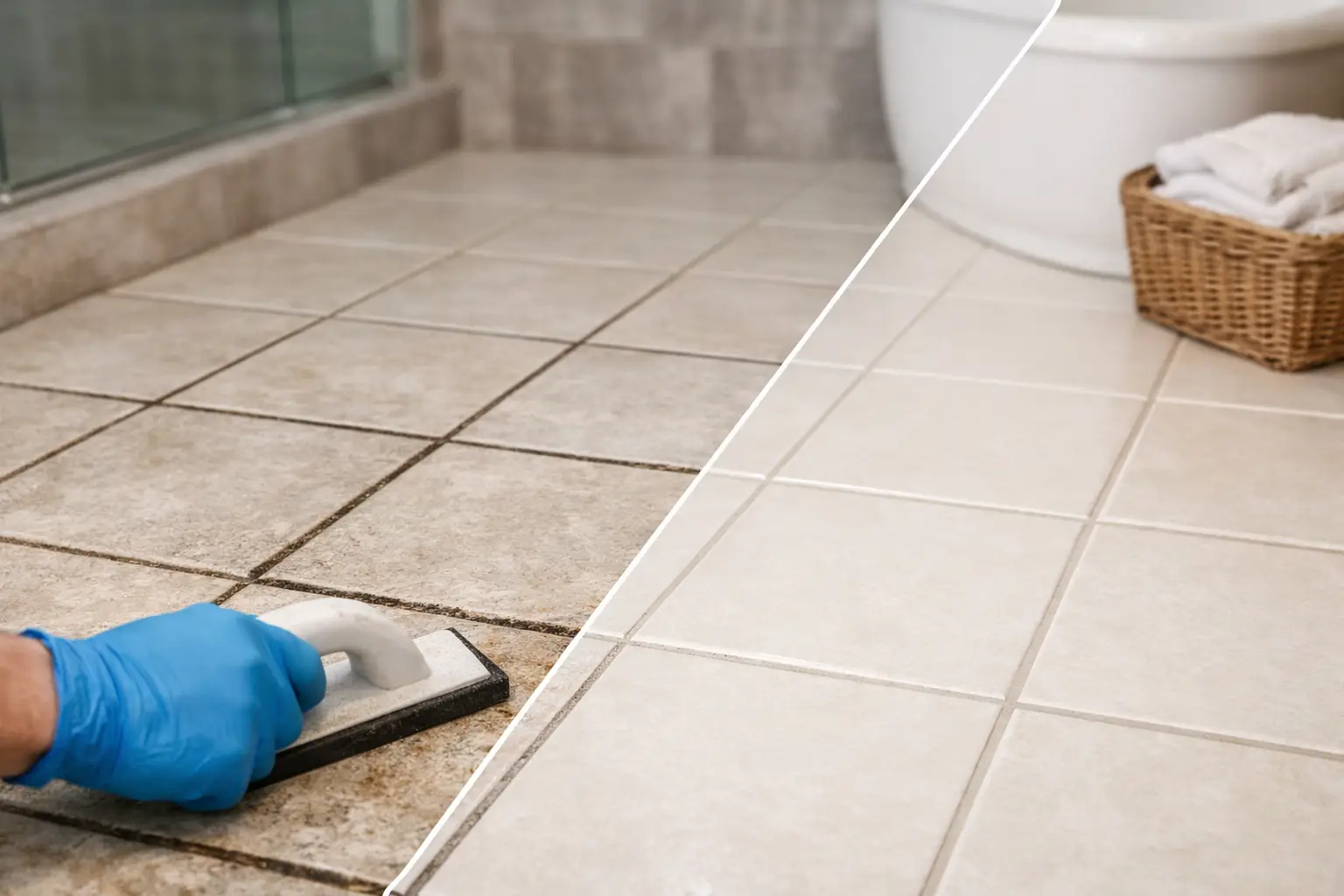
A tile floor can look permanently worn out long before the tile itself has reached the end of its life. The difference in grout restoration before and after results is often dramatic: dark, uneven grout lines become cleaner, brighter, and far more consistent, changing the entire look of a kitchen, bath, entryway, or shower.
For homeowners in Summerville and across the Lowcountry, this is more than a cosmetic fix. Humidity, tracked-in sand, cooking residue, soap film, pet traffic, and everyday foot traffic settle into porous grout over time. Mopping may freshen the tile, but it rarely reaches the soil that has worked its way down into the grout lines.
Why Grout Looks Worse Than the Tile
Tile has a relatively smooth, protective surface. Grout does not. Even when it appears solid, grout contains tiny pores that collect moisture, oils, dirt, and cleaning-product residue. In a busy family home, that buildup can happen gradually enough that you do not notice it until the floor or shower suddenly looks dingy.
In kitchens, grout often absorbs greasy residue and fine dirt carried in from outside. Bathrooms deal with soap scum, body oils, moisture, and possible mildew staining. Near exterior doors, laundry rooms, and mudroom-style entryways, the problem is usually ground-in soil. A home in Cane Bay, Nexton, Goose Creek, or Ladson may also see the effects of the coastal climate, where damp conditions can make bathroom grout especially stubborn.
The common mistake is assuming darker grout means the grout color has changed for good. Sometimes it has. But in many cases, the original grout is simply hidden below layers of embedded soil.
What Grout Restoration Before and After Can Really Show
A professional grout restoration service is not the same as quickly spraying a cleaner and scrubbing with a brush. The goal is to remove accumulated buildup from the grout while protecting the surrounding tile and the people who live in the home.
Before service, grout lines may look brown, gray, blotchy, or almost black in high-traffic areas. They may make white, beige, or light-colored tile look dated even when the tile itself is in good condition. After a thorough cleaning, the grout often returns much closer to its original color, and the tile pattern looks sharper because the lines between tiles are visible again.
That visual change can be especially noticeable in a shower. Once soap film and mineral deposits are removed, clean tile reflects more light. A bathroom that felt dull can look fresher without the cost, noise, and downtime of a remodel.
Still, honest expectations matter. Cleaning can remove dirt and many surface stains, but it cannot repair missing grout, cracked tile, loose tile, or permanent discoloration caused by age, rust, dyes, or improper products. In those situations, grout repair, recoloring, or replacement may be the better next step.
The Difference Between Cleaning and Full Restoration
Homeowners use the word “restoration” to describe several different services. A dependable cleaning company should explain which option fits the actual condition of your tile and grout rather than promising a one-size-fits-all result.
Deep Cleaning
Deep cleaning is the right answer when grout is intact but dirty. Professional equipment and grout-safe solutions loosen and extract soil that ordinary mops leave behind. This can make a major difference in kitchens, hallways, bathrooms, and living areas with tile flooring.
For many homes in North Charleston, Moncks Corner, and Charleston, deep cleaning is all that is needed to make the floor look well cared for again. It is also a practical maintenance service for families with children, pets, and active households.
Grout Repair
If grout is crumbling, missing, cracked, or separating from the tile, cleaning alone will not solve the problem. Damaged areas may allow water to travel where it should not, particularly in showers. Repair should come first, followed by cleaning when appropriate.
Color Sealing or Recoloring
Some stains remain after cleaning because they have penetrated deeply or chemically altered the grout. Color sealing can create a uniform appearance and add protection, but it is a separate process from cleaning. It may be a good option when you want a consistent new grout color without replacing the tile.
The trade-off is simple: deep cleaning preserves the natural grout color when possible, while recoloring changes the finish intentionally. The best choice depends on the condition of the grout, the look you want, and whether the tile is in a wet area.
Why DIY Grout Cleaning Often Disappoints
A little elbow grease can help with a recent spill or a small spot. For an entire floor, DIY cleaning can become a long, frustrating project with uneven results. Store-bought products often clean the top surface but leave embedded soil below, which is why grout may look better for a few days and then seem dirty again.
Harsh cleaners create another concern. Acidic products can damage certain grout types, natural stone, and nearby finishes. Bleach may lighten some stains but does not always remove the underlying buildup, and repeated use can be rough on surfaces and indoor air. Mixing cleaning products is never worth the risk.
Homeowners also frequently use too much water. Saturating grout, especially in a shower, can leave moisture behind rather than removing it. A professional process uses the appropriate cleaning method and extraction to lift away loosened soil instead of spreading it across the floor.
Carolina Green Steam uses professional truck-mounted steam cleaning equipment and green-certified cleaning solutions designed with families and pets in mind. That means homeowners can pursue a visibly cleaner tile floor without bringing harsh chemical-heavy cleaning into the home.
Where Professional Results Make the Biggest Impact
Not every tile surface needs the same approach. A lightly used guest bath may respond quickly, while a textured kitchen tile floor with years of cooking residue will need more attention. High-traffic areas tend to deliver the most satisfying before-and-after change because they hold the most visible buildup.
Kitchen floors are a frequent priority because they are seen every day and collect residue that regular mopping does not fully remove. Bathroom floors and showers are close behind, especially where grout has become dull or discolored from moisture and soap. Entryways, laundry rooms, and screened porch tile can also benefit after seasons of Lowcountry pollen, rain, sand, and muddy shoes.
Property managers, real estate agents, and short-term rental owners can also use grout cleaning to improve presentation between tenants or before listing photos. Clean grout helps a property look maintained, which can influence how buyers, renters, and guests perceive the entire space.
How to Keep Grout Looking Better After Cleaning
Once the grout is clean, simple habits make a real difference. Use a pH-neutral floor cleaner rather than heavy soap-based products that can leave residue. Change mop water often, because dirty water can settle right back into grout lines. In bathrooms, running the exhaust fan and wiping down wet shower surfaces helps reduce the moisture that supports staining and mildew.
For a busy household, perfection is not the goal. The goal is staying ahead of buildup before it becomes deeply embedded again. How often you need professional tile and grout cleaning depends on foot traffic, pets, cooking habits, ventilation, and the color and texture of the grout. Many active homes benefit from periodic professional maintenance rather than waiting until the floor looks beyond help.
If your tile is still structurally sound but the grout makes the room feel tired, do not assume replacement is your only option. A properly cleaned grout line can bring back the crisp, cared-for look of the tile you already own, while keeping your home safer and more comfortable for the people and pets who use it every day.