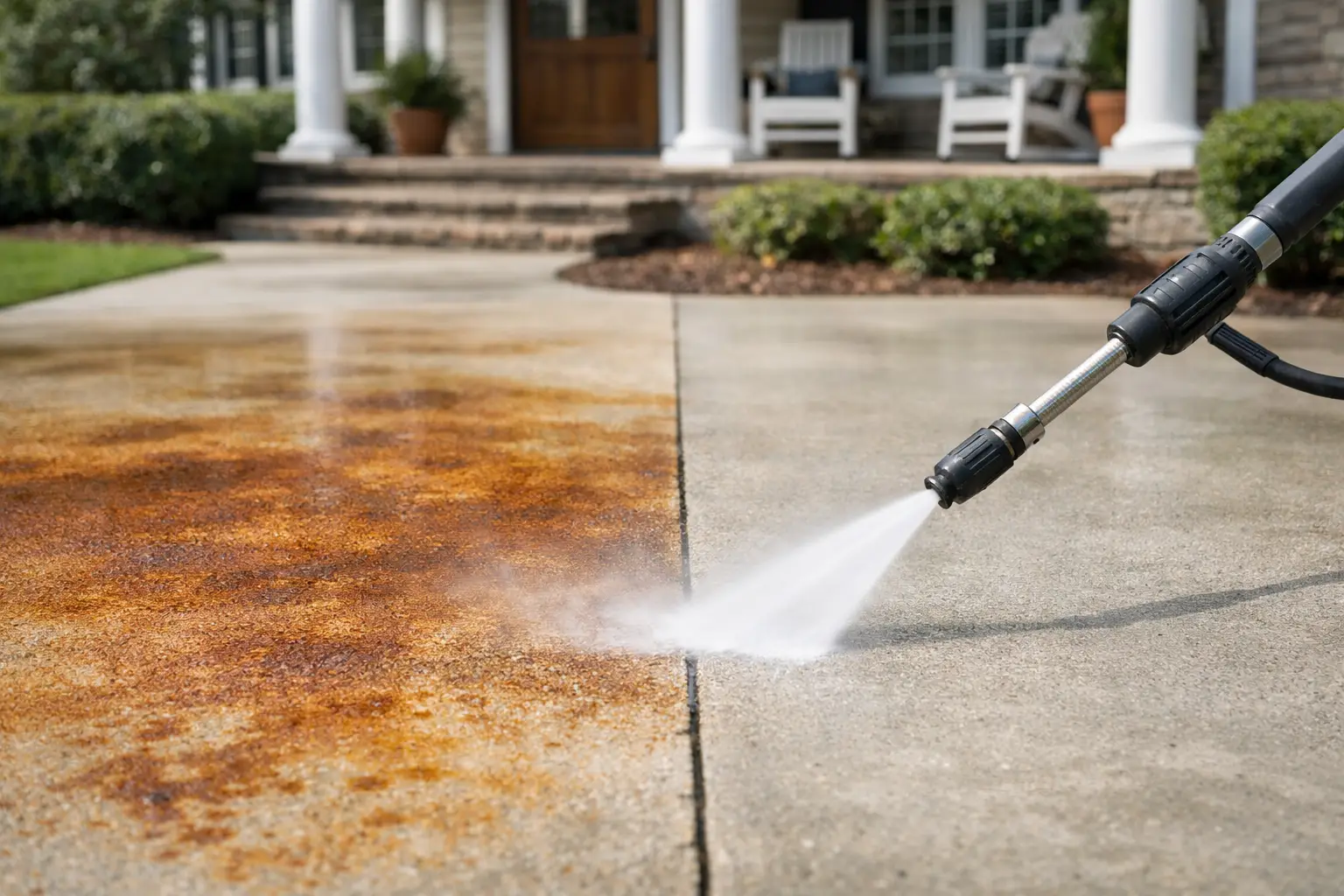
A rust stain can make an otherwise clean driveway, patio, or exterior wall look neglected fast. So, will pressure washing remove rust? It can rinse away loose rust flakes, surface dirt, and some fresh staining, but water pressure alone usually will not fully remove a set-in rust stain. For the best result, the stain needs to be treated correctly before or alongside washing – without damaging the surface underneath.
For homeowners in Summerville and across the Lowcountry, that distinction matters. Our humidity, frequent rain, irrigation water, and coastal air can all contribute to stubborn orange-brown stains on concrete, siding, pavers, fences, and outdoor furniture.
Will Pressure Washing Remove Rust Stains?
Pressure washing is excellent for removing the grime that makes rust stains look worse. It can clean mud, mildew, pollen, algae, and loose oxidation from many exterior surfaces. If the rust is new and sitting on top of a hard surface, a professional wash may noticeably lighten it.
But rust is not simply dirt. It is an iron-based stain created when metal reacts with oxygen and moisture. Once that reaction transfers into the pores of concrete, brick, stone, or pavers, high-pressure water may clean around the stain while leaving the orange discoloration behind.
That is why a driveway can look much cleaner after pressure washing but still have rusty outlines beneath a metal patio chair, around a grill, below an air-conditioning unit, or near a sprinkler head. The cleaning method was not necessarily the problem. The stain often needs a rust-specific treatment rather than more pressure.
Why More Pressure Is Not Always the Answer
When a stain does not lift right away, it is tempting to use the strongest setting possible. That can create more problems than it solves.
Concrete can be etched or scarred by improper pressure, especially if the wand is held too close in one area. Pavers can lose joint sand, painted surfaces can peel, and wood can become rough or splintered. On siding, forceful pressure can drive water behind panels, into trim, or toward vulnerable openings.
The right approach depends on the material, the age of the stain, and what caused it. A professional exterior cleaner starts by identifying all three. Sometimes the safest solution is a controlled rust treatment followed by a measured rinse. For delicate surfaces such as siding, painted trim, roofs, and many fences, soft washing is often the smarter choice.
What Causes Rust Stains Around Lowcountry Homes?
Rust has a way of showing up in places homeowners do not expect. In the Charleston area, moisture stays in the air for much of the year, and outdoor surfaces remain damp after storms, irrigation, and morning dew. That gives metal plenty of opportunities to oxidize.
Common sources include metal furniture legs, grills, tools, planters, railings, nails, gutters, air-conditioning components, and rusty fasteners. Sprinkler systems can also leave rust-colored stains when the water contains iron. Fertilizer can produce a similar-looking stain on concrete, particularly when granules are left on a driveway or walkway and get wet.
A rust stain beneath a planter may be a one-time transfer. Repeated staining along the same edge of a driveway, however, may point to irrigation overspray or a corroding metal component nearby. Removing the discoloration without addressing the source can mean the stain returns shortly after cleaning.
The Best Way to Remove Rust From Concrete
Concrete is one of the most common surfaces affected by rust, especially on driveways, sidewalks, pool decks, and patios. Because concrete is porous, treatment should be effective enough to break down the rust stain while being appropriate for the finish and nearby landscaping.
A proper process usually begins with clearing away loose debris and testing a small, less-visible area. A rust-removal product formulated for masonry may then be applied to the affected section according to its directions. After the treatment has had time to work, the area is rinsed carefully. Pressure washing can be helpful during the rinse phase, but it should not be used as a substitute for the stain treatment itself.
Avoid randomly mixing household cleaning products in an attempt to make a stronger solution. Acids, bleach, and other cleaners can react unpredictably, damage surfaces, harm plants, and create safety concerns. A product that works on bare concrete may be inappropriate for colored pavers, natural stone, painted surfaces, or decorative finishes.
If you are unsure what material you have, or if the stain covers a large area, professional evaluation is the safer route. This is particularly true for newer concrete, stamped concrete, sealed surfaces, and pool decks where uneven cleaning can leave a noticeable patch.
Can Pressure Washing Remove Rust From Pavers?
It depends on the paver type and the depth of the stain. Surface rust may improve with cleaning, but pavers often require a targeted rust treatment because their texture and joints hold staining. Too much pressure can strip sand from between pavers and leave the area unstable or uneven.
The goal is not just to make one orange spot disappear. It is to restore a consistent appearance without creating bright, etched circles around the treated areas.
Can It Remove Rust From Vinyl Siding?
Rust on vinyl siding should not be attacked with high pressure. A focused blast can damage the siding, force water behind it, or leave visible marks. A gentle, surface-appropriate cleaning method is usually preferred, followed by a low-pressure rinse.
Rust streaks on siding often come from rusty nails, fixtures, gutters, or exterior hardware. If the source remains in place, the streaks can return after the next stretch of wet weather.
When Rust May Not Come Out Completely
Even with the right treatment, complete removal is not guaranteed. Older stains can penetrate deeply, and some surfaces have existing damage, discoloration, or coatings that limit what can safely be done. Natural stone is especially variable because certain stones can react poorly to acidic rust removers.
There is also a difference between removing a stain and repairing corrosion. If a metal railing, gutter, or outdoor fixture is actively rusting, cleaning the runoff stain does not stop the metal from deteriorating. That item may need repair, repainting, sealing, or replacement to prevent a repeat problem.
A dependable cleaning professional should set realistic expectations before beginning. The goal is always the best safe result for your property, not an aggressive method that trades a rust stain for permanent surface damage.
How to Prevent Rust Stains From Returning
Prevention is often simpler than repeated stain removal. Keep metal furniture and planters off bare concrete with protective feet or trays. Move grills and tools before rain, and check outdoor furniture for chipped coatings or exposed metal.
If irrigation is causing orange staining, have the system inspected and avoid overspray onto driveways, patios, siding, and fences. Homeowners in communities from Nexton and Cane Bay to Goose Creek, Ladson, and Moncks Corner may also want to watch for staining around irrigation zones, where iron in the water can leave repeated deposits.
Regular exterior cleaning helps, too. Removing pollen, algae, dirt, and moisture-holding buildup makes it easier to spot early rust transfer before it becomes embedded. It also protects the curb appeal of concrete, walkways, pool decks, and patios during South Carolina’s long outdoor season.
A Safer Answer for Stubborn Exterior Stains
Rust does not always require a harsh, one-size-fits-all cleaning approach. It requires the right treatment, the right water pressure, and a clear understanding of the surface being cleaned. That is especially true when your driveway, siding, landscaping, or pool area is involved.
Carolina Green Steam helps homeowners throughout Summerville and the surrounding Charleston-area communities clean exterior surfaces with professional care and practical expectations. If rust stains are taking away from an otherwise well-kept property, start by identifying the source and choosing a method that protects your home as carefully as it cleans it.