Carpet can make a home feel warm and comfortable, but it also catches what comes in from the Lowcountry outdoors: pollen, dust, pet dander, soil, and tiny particles that settle deep below the surface. The best ways to remove carpet allergens are not about masking odors or spraying heavy fragrances. They combine consistent home care with a deep, thorough cleaning process that removes the buildup your vacuum cannot reach.
For families in Summerville, Nexton, Cane Bay, Goose Creek, and throughout the Charleston area, pollen season and humid weather can make this job feel never-ending. The good news is that a cleaner carpet can be easier to maintain when you focus on the right habits, use the right equipment, and avoid shortcuts that leave allergen-containing debris behind.
Why Allergens Stay Trapped in Carpet
Carpet acts like a filter. Its fibers catch particles that enter through doors, open windows, shoes, pets, and everyday activity. Some of that material stays near the surface, but much of it works down into the backing and padding as people walk across the room.
Common carpet allergens and irritants include dust mites and their waste, pet dander, pollen, mold spores, dust, and outdoor particles. In homes with pets, dander can build up even when a dog or cat does not shed heavily. In the Charleston-area climate, moisture also matters. A damp carpet or an untreated spill can create conditions that support mildew or mold growth.
That does not mean carpet is automatically unhealthy. It means carpet needs more than occasional spot treatment. The goal is to physically remove the material trapped in the fibers while keeping the carpet dry enough to prevent new problems.
The Best Ways to Remove Carpet Allergens Between Deep Cleanings
Vacuum Slowly With a HEPA-Filtered Vacuum
A quality vacuum is the most useful tool for routine allergen control. Look for one with a sealed system and a HEPA filter, which is designed to capture very small particles rather than blowing them back into the room through the exhaust.
Technique matters as much as the machine. Make slow, overlapping passes, especially in the paths people use most often. A fast pass may pick up crumbs and visible lint, but it has less time to lift fine dust and dander from the carpet pile. Vacuum high-traffic spaces two or three times per week, and consider daily vacuuming in rooms where pets spend most of their time.
Empty the canister or replace the bag before it is packed full. If your vacuum uses a reusable filter, follow the manufacturer’s cleaning instructions. A clogged filter reduces suction and can work against the very reason you bought a HEPA vacuum.
Keep Outdoor Particles at the Door
In Summerville and nearby communities, pollen and sandy soil do not need much invitation to get inside. Place durable mats outside and inside entry doors, then clean them regularly. Ask family members and guests to remove shoes at the door when practical, particularly after yard work, walks, or trips to local parks.
This small routine reduces the amount of pollen, dirt, and debris that reaches the carpet in the first place. It also helps protect carpet fibers from abrasive grit that can make them look worn before their time.
Reduce Pet Dander Before It Reaches the Floor
Pet owners do not need to choose between a comfortable home and a clean carpet. Regular grooming, washing pet bedding, and wiping paws after outdoor time can significantly reduce what settles into the fibers. Brush pets outdoors when possible, since brushing indoors releases loose hair and dander directly into the air.
Pay close attention to favorite pet areas, including beds, furniture, and the carpet around food bowls. Vacuum upholstery and rugs as well as wall-to-wall carpet. If a pet has had an accident, act quickly. Urine residue can create lasting odor issues and may require professional pet odor treatment rather than a surface-level cleaner.
Use an Air Cleaner as a Supporting Measure
A portable air purifier with a HEPA filter can help capture airborne particles before they settle. It does not replace vacuuming or professional carpet cleaning, but it can be useful in bedrooms, nurseries, and rooms where family members spend the most time.
Keep in mind that an air purifier treats the air, not the debris already held in the carpet. It works best alongside regular cleaning and reasonable humidity control. If your home feels damp, address the moisture source and use air conditioning or a dehumidifier as needed.
Do Not Rely on Carpet Powders and Strong Fragrances
Many store-bought carpet powders are marketed as odor or allergy solutions. In reality, they can leave behind residue that settles into carpet backing, gums up vacuum filters, and creates extra particles for children and pets to contact. Heavy fragrances may cover odors without removing the source.
Be cautious with rental machines and do-it-yourself shampooing, too. They can be useful for a small, fresh spill, but they often lack the extraction power to remove deeply embedded soil. Over-wetting is the bigger concern. If too much water or detergent stays in the carpet, drying times increase and the carpet may attract soil more quickly afterward.
For homes with allergy-sensitive family members, children, or pets, choose cleaning methods that emphasize removal and low-residue products. A strong chemical smell is not proof that a carpet is cleaner.
Professional Steam Cleaning Removes What Routine Care Misses
Even a well-maintained carpet benefits from periodic professional cleaning. Vacuuming handles surface debris and helps manage the weekly buildup, but it cannot fully reach the soil, dander, and fine particles packed down by foot traffic.
Professional truck-mounted steam cleaning uses hot water extraction to flush contaminants from deep within the carpet and pull them out with powerful suction. When done properly, this process leaves far less residue than many traditional shampoo methods and supports faster drying. The exact approach should always match the carpet fiber, condition, and any spots or odor concerns in the home.
At Carolina Green Steam, we use professional truck-mounted equipment and green-certified cleaning solutions that are safe for your family and pets when used as directed. That is especially valuable for households that want visible results without filling their home with harsh chemical odors.
For most homes, professional carpet cleaning every 6 to 12 months is a sensible baseline. The right schedule depends on your household. You may need cleaning more often if you have multiple pets, young children, frequent guests, allergy concerns, or carpet in busy areas such as living rooms, hallways, and stairs. A quiet guest room may not need the same frequency as the main family room.
Help Carpet Dry Completely After Cleaning
Drying is part of allergen control, not an afterthought. After a professional cleaning, increase airflow by running ceiling fans, keeping the thermostat at a comfortable setting, and avoiding heavy foot traffic until the carpet is dry. Your technician can give you realistic drying guidance based on humidity, carpet type, and the cleaning method used.
Avoid closing up a freshly cleaned room with no airflow, particularly during a humid South Carolina afternoon. If a carpet remains wet far longer than expected or develops a musty smell, contact the cleaning provider promptly. A dependable company should be responsive and stand behind its work.
Protect Clean Carpet From the Next Round of Buildup
Carpet protector can be a worthwhile addition after professional cleaning, especially in active households. Protector helps carpet fibers resist certain spills and dry soil, giving you more time to blot accidents before they become stains. It is not a force field, and it does not replace vacuuming, but it can make regular maintenance more effective.
The best approach is simple: address spills quickly, blot rather than scrub, keep entryways cleaner, vacuum with purpose, and schedule deep cleaning before the carpet looks visibly dirty. By the time carpet looks dull, it has usually been holding fine debris for a while.
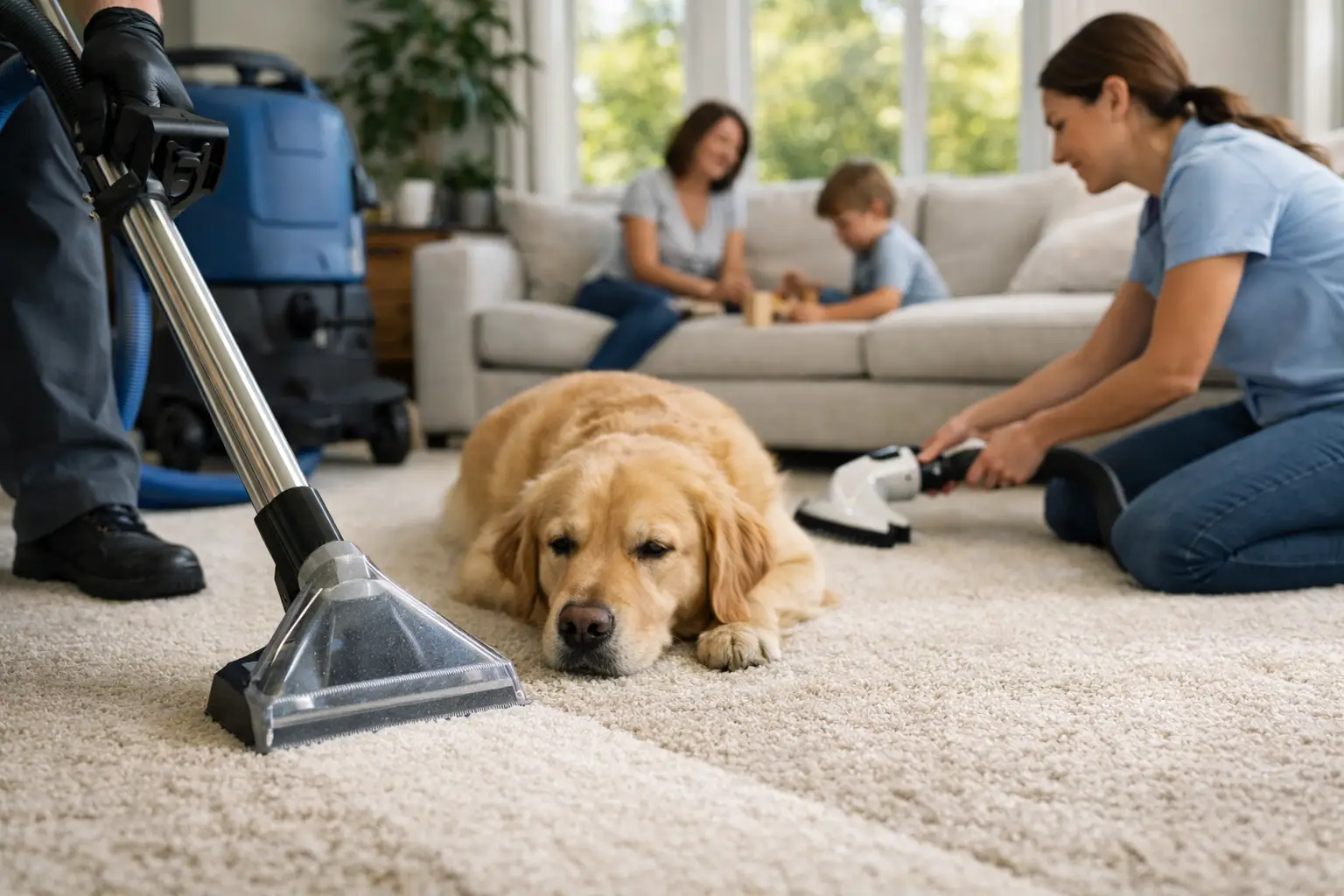
A cleaner carpet should feel like one less thing to worry about when kids are playing on the floor, pets are stretched out in the living room, and friends stop by. Give it the consistent care it needs, and your home can stay fresher, more comfortable, and ready for the people who live in it.